Pastor Or Reverend?

J.A. Schep. Trowel & Sword, October 1961

Preamble: From our vantage point it seems rather amusing to see two Dutchmen having a spat over the correct use of the English language. One could well ask, “Why did they take such small matters so seriously?” With apologies to any Dutchman reading this post, perhaps it says something about the nature of Dutchmen (of which I am one).

Pastor Or Reverend?

In  the  August number of  “Immanuel”, the monthly paper  of Classis Wellington, New Zealand,  the Rev. A. de Graaf started substituting the word “Pastor” for  the usual “Reverend”, as far  as the title for ministers is con­cerned.

In the September number the Rev. de Graaf tells his readers what he thinks is wrong with the title “Reverend”.  The word “reverend”, he writes, occurs only once in  the  Bible,  viz.  in Psalm 111:9,  where it is said of God that His Name is holy and reverend.   The word “reverend” in  this connection means “to be feared,  to be reverenced” and, therefore, it is a title which, according to  the Rev. de Graaf, “no man should bear:  God will give His glory to no man”.  Quite different from the word “Reverend” is the title “Pastor”, which does not denote “Dignity but  . ..  the job this man has to do”.  

Some members of the New Zealand churches have raised objections to the change, in particular because it makes the New Zealand churches different again from the Reformed sister churches and creates another barrier “to divide us from the Australian churches which all  use the ·word ‘Reverend’.

While replying to these objections the Rev. de Graaf invites our churches and their papers (“Trowel and Sword” included) “to react openly, either with approval or disapproval”.

I am gladly prepared to comply with this request and to state the reasons why I  cannot agree with the standpoint  of the Rev  de Graaf.  They are the following:

  1. The fact that in Scripture the word “reverend” is used with regard to God alone, does not imply that it  may not  be used in connection with man. The word “holy” is  also used for God in the same Psalm, in one breath with “reverend”,  but everywhere in  Scripture the believers also are called holy. This implies that the word “reverend” may be used for  men as  well. Of course, a man will  be  “reverend” in a different way than God.  But this applies for  the denotation holy too.
  2. As every English Dictionary tells us the word “reverend” used of men, (especially of clergymen) means:  “worthy of high esteem”:  just as the Dutch word “weleerwarde”. According to 1 Tim. 5: 17, faithful elders,  especially those that labour in  the Word and  in  doctrine, are “worthy of double honour”. That means:  they are reverend (“worthy of high esteem”). In the light of this text one cannot possibly maintain that calling a minister “Reverend means giving to man what  belongs to God alone,  or that it  is unscriptural.
  3. It is  possible to argue that the word “Reverend” as a title has something against it,  and I would agree there.   But if we have to abandon all words that have something against them,  the end is  not  to be seen. The Dutch word “Domine” really means: Master,  Lord. Ever heard a less suitable name for a minister  who is a servant of Christ, and a servant  of the Church for Christ’s sake?  But who will undertake  to abandon the title Ds. (dominus = Master, Lord) for  this reason?   One might also object to the term”Covenant of works” to denote God’s Covenant of love in Paradise before the Fall. There are many words and expressions, that are very inadequate.

But there is a Latin proverb that contains much wisdom:  ”Verba valent usu”, i.e. “Words derive their value from the use that is made of  them”. That means, as far as the word “Reverend” is  concerned:  whatever the original and exact meaning of the word may be, it is used just as a title, or part of a title for a minister of the gospel. When we use it in connection with the name of a minister, we do not ever think of the original meaning. The word has its value as  title, or part of a title, and as such it has every right of existence.

  1. For various reasons it would have been better if the matter of substituting “Pastor” for “Reverend” had been submitted for discussion to the ministers and the Churches in Australasia before any actual change-over had taken place.  The question of the title concerns all the ministers  and even all the Churches.  Nobody has the right to change a generally adopted and recognised title overnight and on his own.

This is the more true as according to the Rev. de Graaf using the title “Reverend” means to give to man what belongs to God.  On the basis of this principle, it would be sinful to use this word in writing and speaking to (or about) ministers of other denominations, too.

Will most of them not be rightly indignant and feel offended, when their official title “Reverend” is denied them and replaced, against their will, by the title “Pastor”, which they think inferior?  Will our ministers and churches not be blamed for it and branded “foreign” and “self-conceited”?

5. The Rev. de Graaf appeals also to the fact that the Lutheran Church uses the title ‘Pastor’ This is true, but it is only part of the truth. A prominent Lutheran minister, who for some years served a New Zealand congregation, told me all the facts:

  1. The custom to speak of “Pastor” was brought from Germany.  There is no principle involved.
  2. “Pastor” is used only in unofficial daily conversation; the official title is “Reverend”, which is used in all official announcements, in addressing a minister at public meetings, in writing to him, etc.
  3. The Lutheran ministers do not like the word “Pastor” at all, because in the English speaking world this word is commonly used to denote unordained preachers, or ministers who never received proper theological training.

It is obvious that the appeal to the Lutheran custom fails completely. The facts lead to the opposite conclusion!  

6. I do hope that the Rev. de Graaf and whoever of his colleagues may have agreed with him in this matter, may soon return to our normal way of denoting the ministers of the Word.  Apart from the reasons mentioned above, there is also the fact that another stumbling block has been put on the road to uniting the Reformed Churches in Australasia into one denomination.  If in all possible things the two groups go different ways, follow different customs, have different affiliations – what can be the use of forming one denomination?  I am not against unification, though in certain respects I wonder whether it ·will be wise to unite.  But what I do wish is this, that those who ask for union at least guard against creating new and unnecessary differences that cannot but make the desired union more difficult to obtain.

J.A. Schep.

We look forward to receiving feedback about any of our posts. We also encourage you to share our posts with family, friends and acquaintances; in fact anyone you think may appreciate and/or benefit from the knowledge and wisdom handed down to us from the past.   To view previous posts visit our website at www.tsrevisited.com
Growth

Rev. J.W. Deenick. Trowel & Sword. May 1973

Preamble: (Taking Stock) It had been 22 years since the establishment of the CRC in Australasia. A lot had happened in that short space of time and the growth of the denomination would seem to be indicative of God’s blessing on this work. This begs the question: What of the 52 years since then? Has growth continued or are we now in decline? Whatever the answer, how do we account for it? These questions were also asked by Bill Deenick in his article below. So now perhaps we should ask ourselves: Where to from here? We do not look provide answers. That is the task of every member of the CRCA and CRCNZ. We, along with J.W. and many other contributors of T&S over the years merely ask the questions.

Growth

The 1973 yearbook for the Australian and New Zealand Reformed Churches has arrived, very nicely in time and very capably edited. The Rev. W.F. VanBrussel in a survey on the events of 1972 reports on many encouraging and some not so encouraging aspects of Reformed church-life in this part of the world.

From an organisational point of view the churches seem to be doing well. There are at present 34 churches in A. and 15 in NZ., that is if we count Canberra, Gosford and Wainui-o-mata as independent churches, which officially they are not (yet). In A. these churches are served by 30 ministers, one minister for evangelism and one overseas missionary; in NZ they are served by 11 ministers and one overseas missionary, the Rev. Stephen Feng, whose name unfortunately is missing; this ought to be rectified in next year’s edition. There are two emeritus ministers, one in A. and one in NZ. and two ministers serve as theological professors at the RTC.

In Australia 31 of the congregations have their own building, usually with some additional accommodation for youth work; one congregation has two church buildings. Four churches meet for worship at two different places, one at three places. In New Zealand 12 or 13 (I am not sure) of the congregations have their own building and one church meets for worship at two different places.

All churches have a session clerk, most have next to their elders one or more deacons. In the majority of the congregations there are Sunday schools and youth clubs: many have a cadet and a calvinette club (clearly a growing movement); women’s guilds, bible-circles and choirs are well represented; there are a good number of Christian day school associations, five of which have their own school; but men societies are a dying institution. From all this it appears that most local Reformed Churches are well organised bodies properly cared for by elders, deacons and ministers and with a stable membership. In A. and NZ together there is a membership of close to eleven thousand members.

Is it a growing membership? This question comes up immediately. We are pre-occupied with growth. Numbers are there to show increase. Statistics are there to indicate success in extension and growth.

There is at this stage no significant growth in numbers. In his NZ news the Rev. Harry L. Hoving asks for a justification (if there is any) for this lack of growth. I have no answer to that. The Reformed Churches have to struggle, no doubt, with the same problems as with which in a secularising society all the Christian Church is faced; and apart from that there are a few problems that are peculiar to the situation in which in this part of the world the Reformed Church finds itself, i.e. concentration in the main urban centres (through which members departing to country areas and provincial centres are often lost) and identification with a predominantly migrant membership.

Taking into account the “natural” growth through births and baptisms the churches have not grown in numbers. This has not been because people joined other churches or the sects. Relatively very few did; and in fact those who came over from other churches were more in number than those who left. Nor has it been because of (church-wise) mixed marriages. The great majority of marriages performed have been between two Reformed partners.

There are, however, two disturbing figures in the statistics. In 1972, we notice, 73 members in A and 17 in NZ (i.e including the baptised children) withdrew from the church without any church destination. That means they did not merely leave the Reformed Church, they left the Christian Church as a whole. They followed the trend of the time and joined the vast, spiritually colourless masses of those who no longer worship regularly (if at all) in any Christian Church. Notwithstanding all our preaching and the pastoral work of elders and ministers they were possibly never really converted and as Demas they preferred after all to live in the world.

The second disturbing figure is that of gains through evangelism. In Australia 22 members have been won through evangelism, in NZ 5 members. That is both in A and NZ about one soul per two churches or per two ministers. Even when we point out that evangelism does not aim at increasing the membership of the Reformed Church and that we have evidence that through our efforts in public evangelism (Back to God Hour, World Home Bible League, Vacation Bible Schools etc.) both adults and children have been won for the Lord Jesus Christ, we have not really given an explanation, far less a justification, for this figure.

Is it personal evangelism that is lacking both among members and ministers? And if it is, why is this so? Do we not really love the Saviour as much as we claim in our creeds?

BILL DEENICK

********************************************

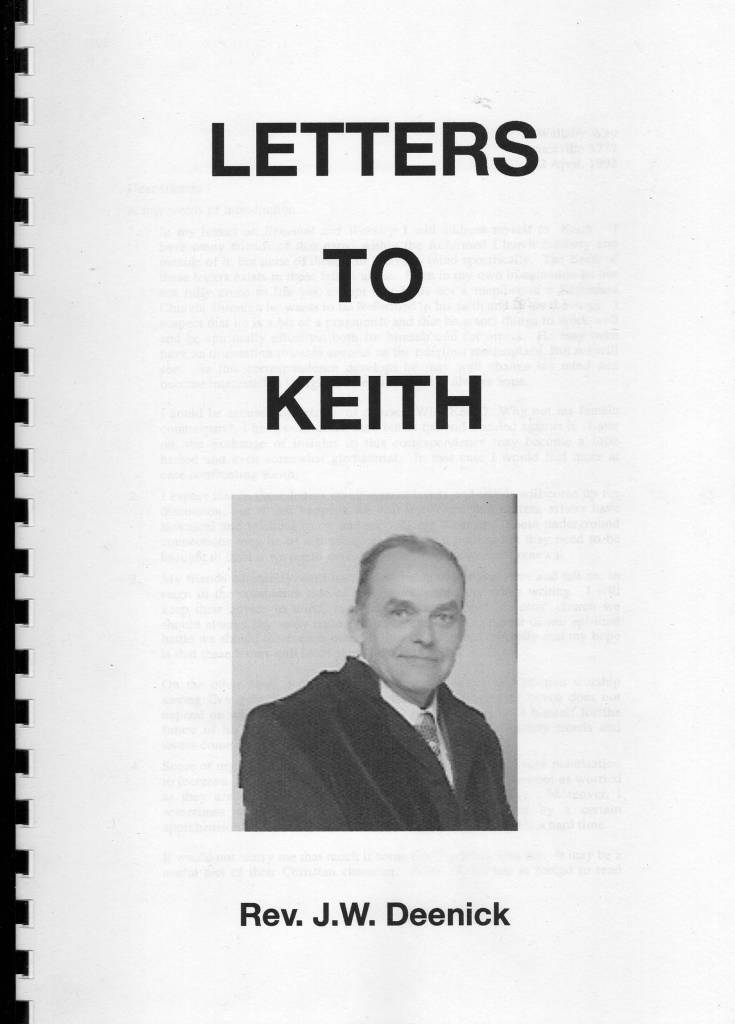
There has been quite a bit of interest in receiving a copy of “Letters to Keith” by Rev. J.W. Deenick. Some have requested electronic copies which have been emailed to them. Printed copies will take a little longer. If you still wish to receive a free copy it is not too late. Send a request in the comments box below. Please specify printed or electronic copy. (The TSR team)

********************************************

We look forward to receiving feedback about any of our posts. We also encourage you to share our posts with family, friends and acquaintances; in fact anyone you think may appreciate and/or benefit from the knowledge and wisdom handed down to us from the past.   To view previous posts visit our website at www.tsrevisited.com

← Back

Thank you for your response. ✨

Letters To Keith (Introduction)

Rev. J.W. Deenick. April, 1992

Preamble: Even after retirement Bill Deenick was not one to let the grass grow under his feet. Over a twelve month period he wrote a series of “letters” on Renewal and Worship to a fictional person whom he called Keith. Although it had been suggested that he publish the letters in Trowel & Sword he gives his reasons for not doing so in his introduction below. It would appear that he did have a mailing list who received each letter through the post as it was completed. Likewise, we will not print the entire work in TSR as it runs for some seventy pages, however if after reading the introduction you would like to read more, send a request through the “Contact us” box below and we will send a copy of the complete work, as shown above, through the mail.

Letters To Keith

Dear friends.

A few words of introduction.

1. In my letters on Renewal and Worship I will address myself to ‘Keith’. I have many friends of that name within the Reformed Church ministry and outside of it, but none of these will I have in mind specifically. The Keith of these letters exists in these letters alone. Even in my own imagination he has not fully come to life yet, except that he is not a member of a Reformed Church, although he wants to be Reformed in his faith and in his theology. I suspect that he is a bit of a pragmatist and that he wants things to work well and be spiritually effective, both for himself and for others. He may even have an orientation towards success on the religious marketplace. But we will see. As this correspondence develops he may well change his mind and become interested in liturgical renewal. There is always hope.

I could be accused of sexism of course. Why Keith? Why not his female counterpart? I have considered that, but in the end decided against it. Later on, the exchange of insights in this correspondence may become a little heated and even somewhat gladiatorial. In that case I would feel more at ease confronting Keith.

2. I expect that in these letters many current issues and trends will come up for discussion, but if that happens we will not forget that current affairs have historical and spiritual roots, and we will dig them up. These underground connections may be of a theological or cultural nature, but they need to be brought to light if we are to make any real progress towards renewal.

3. My friends constantly warn me against being too provocative and tell me to reign in the combative side of my nature, especially when writing. I will keep their advice in mind, but I do not believe that in Jesus’ church we should always shy away from confrontation. In the context of our spiritual battle we should teach each other to think clearly and critically and my hope is that these letters will be of some help to that end.

On the other hand, I am well aware that the future of Christian worship among Evangelicals in this country and in the Reformed Church does not depend on whatever letters I write. We may trust the Lord himself for the future of his church. He rules and provides, while in history trends and issues come and go.

4. Some of my friends are worried that letters like these may cause polarisation to increase. We have enough of that already, they feel. I am not as worried as they are. I am more afraid of dullness and ignorance. Moreover, I sometimes suspect that their call for peace is inspired by a certain apprehension about their own side of the argument being in for a hard time.

It would not worry me that much if some find it hard to love me. It may be a useful test of their Christian character. After all, no one is forced to read these letters which, if they are not worth serious attention, will soon be forgotten.

5. I have been asked whether it would not be better to seek publication in Trowel and Sword. It would widen the circle of readers. That may be true, but I did not think that it was fair on the editor of Trowel and Sword to ask him for the publication of letters that are likely to displease, and provoke to indignation. a proportion of its readers. Furthermore, I do not want to be limited in my freedom to be as frank and forthright as may seem to be required.

On other matters I hope to continue offering material to Trowel and Sword. It is a long-time habit that is not easily given up.

6. Those who have read C.S. Lewis’ Letters to Malcolm, about prayer, will notice that I follow his model. It is a long time ago that I read these letters and I cannot find my copy back among the Lewis books I still have; but at the time I much enjoyed that book and for the purpose I have in mind Lewis’ letters seem a good model to follow, even though I am well aware of my limitations. As far as these letters are concerned I have no higher hopes and ambitions than that they may be readable. As literature they will only be of negative value. Nor will there be a desk-editor for the correction and the streamlining of the English.

7. Some have asked whether I can manage financially. So far in my life I have been able to, be it at times only just. With my wonderful wife no longer there to keep an eye on things, the situation has not improved.

To be honest, I have not given that aspect of this undertaking any thought yet. I do not expect it to give any problem to anyone. I have received some kind donations for which I am truly thankful. We will see how we go. I will keep you posted. For the time being I am in no trouble.

Thank you for your moral support and prayers

Yours in Christ. 

J.W.Deenick

We look forward to receiving feedback about any of our posts. We also encourage you to share our posts with family, friends and acquaintances; in fact anyone you think may appreciate and/or benefit from the knowledge and wisdom handed down to us from the past.   To view previous posts visit our website at www.tsrevisited.com

← Back

Thank you for your response. ✨

To The Barricades

Rev. Bill Deenick. Trowel & Sword. May 1973

Preamble: Bill Deenick was intelligent, wise and softly spoken, among other things. Not what you would call a radical. To read his suggestion that Christians should man picket lines and barricades would seem somewhat out of character for this man of God. That is, until you realise that he was also passionate about his beliefs. I remember many years ago reading a feature article in a Melbourne newspaper highlighting his role in the Dutch underground, rescuing Jews from the Nazis during WW2. Above all, Bill was a man of action. Knowing that, it comes as no surprise that he urged Christians into action in another holocaust – the killing of the unborn in the place where they should have been safest. In their mothers’ wombs. A battle which today, sadly, barring a miracle, has been largely lost.

To The Barricades

The Christian community in Australia may well have to go to the picket line and the barricade if they desire to have any say at all in the determination of a number of urgent moral and legal issues at stake at the moment. It will no longer be good enough to leave it to the archbishop and the cardinal to give expression to the Christian opinion. Politicians today do not seem to believe that the church has a following or that Christian people have a conviction unless we are willing to fight for it publicly in not overly peaceful demonstrations.

The first instance on which this may be necessary is abortion law reform. Things have happened as they were expected to: a few private members of the House of Representatives have moved a bill under which abortion would be available on demand in the district for which the Federal Government is responsible i.e. the A.C.T. The prime minister (ie. Whitlam) has already indicated that he favours the bill; and since the main political parties have no policy on the matter they have decided that their members in parliament are free to vote as they see fit.

The matter itself is very clear. If the bill becomes law it will be legally permissible for an expectant mother to have her pregnancy terminated if she so desires. This, we are told, is her right. If there are reasons why she thinks that the new human life conceived in her should never become a living child it is up to her and to no one else to make that decision.

I do not propose to re-open the discussion on every aspect of the abortion debate. Legally the matter is complicated by the fact that in a State like Victoria the law as it is has practically become a dead letter since in a recent case no jury could be found prepared to convict a doctor who had practiced abortions for some considerable time. From that angle it could be argued that the proposed bill if it were to become law would only sanction the situation as it already exists, and for this reason many politicians will find it politically safer to leave things as they are. If the present law cannot be upheld because it is in practice “un-policeable” what more do abortionists want? In that respect the supporters of law reform are at least more honest. But for the Christian community the pressing question remains whether under the pressures available to the media for public communication (where Christian thought has very little influence) life and legislation in Australia should be allowed to be further de-christianised.

It may be helpful to have a closer look at some of the more popular arguments advanced in favour of law reform, since many people are confused by the seemingly humanitarian concern of the reformists. One argument used constantly is that the pregnant woman herself alone has the right to determine what is to happen to the life that she carries. Her womb is her own and the life that she carries is hers. She can do with it what she believes to be best. It is her future and her happiness that is at stake, and no one else but she has the right to determine what she has to do for her own wellbeing. The church certainly has nothing to do with it, and even the man who fathered the life that she carries has little voice in the matter, if any,

This argument has its roots in the individualistic philosophy of existentialism. In that philosophy only one question is really meaningful, i.e. what does in my opinion favour my personal happiness as I see it. I have no obligation but to myself alone and I have no ambition but to remain absolutely free to be happy in my own way. It is clear that in that context I cannot accept any commitment to the happiness of others. For a man like Jean Paul Sartre the neighbour represents hell. He robs me of my liberty. He threatens my individual happiness. He will always try to make me do things that benefit him but burden me. In her novel “She Came To Stay” Simone de Beauvoir rationalises the murder of the girl who unwelcome yet came to stay. In that climate of thinking the pregnant woman, who experiences the life growing in her as a threat to her individual liberty and happiness, has no option but to dispose of it. That is her prerogative.

In the light of the teaching of Christ this philosophy represents the old lie with which man turned away from his original destiny in the service of God. The liberty which he then sought he never found; nor will he find it today. If our (supposed) self-interest is to be the one and only standard by which we desire to live we are left in the bondage of a most arbitrary, and often cruel master and society is heading for anarchy.

In the N.T. the fellow man does not represent hell but heaven; he does not threaten my liberty but he calls me to a meaningful encounter in the service of God. In fact in him we meet God. What you do to him, says Jesus, you do to me. There is no return to personal happiness but through the recognition of our commitment to the happiness of others and in a broken world like ours this always means sacrifice. In the case of a pregnant woman this means that she cannot deny personal responsibility for the life which grows in her to be child and a person. She cannot deny a growing I/you relationship between herself and what is to be her child. It is not a living person yet; it is still in a way part of herself but it is in the process of becoming an individual human person. She has no right to interfere with that process simply because the final authority over her body is not hers. Paul already maintains in Cor. 7 that the wife does not rule over her own body but the husband does; likewise the husband does not rule over his own body but the wife does. And in Paul’s thinking they know together that the final authority over their bodies, as temples of the Holy Spirit, is not theirs but God’s. If anyone destroys God’s temple God will destroy him.

To Sartre and others all this may seem to be hell; for the Christian it is the kingdom of heaven in which people are in love mutually concerned for each other’s body. From the moment of conception there is (in the process of growing) another body meant to become by the grace of God a temple of the Holy Spirit; and in the relationship between husband and wife it means that a third life has come into the picture which comes with lawful demands. Admittedly outside marriage things become immediately more difficult, but not principally different. The unmarried mother has no final authority over her own body either, nor can she escape responsibility over against God for the child growing in her. She must protect it and make it welcome. A true understanding of what personal happiness means will lead her to the conclusion that individual personal wellbeing is served best by the acceptance of divinely ordained responsibility and by obedience to the law of Christ.

In that law we are called to care with sacrificial love and concern for human life (our own and everybody else’s). There are no shortcuts to personal happiness as suggested by those who favour abortion on demand. A return to true happiness is found only when all concerned are prepared to bring the sacrifices needed.

This has not always been properly understood in Christian circles, nor has it always been practiced. Not always have Christian families been able to deal with the problem of a sixteen year of old pregnant daughter in a manner that restored personal and family happiness. Yet, by the grace of God there have been such Christian homes, and Christ’s church continues to have a great task here. First of all we must see that within the church all children are welcome, those born to the single mother as well. But also outside the Christian community the church has a tremendous field of work for the restoration of happiness in the way of sacrificial and loving concern. It is not in its legislation against abortion but in its condemnatory attitude and in its lack of a loving concern for the restoration of life that the Christian world has fallen short in many disastrous and hypocritical ways. Therefore the law reform that we need is not that abortion be made legal. That is a no exit road. If it leads to anything it is to the depreciation of human life and the deepening loneliness and unhappiness. The law reform needed must be found in the direction of an enlightened legislation towards the care for and the protection of the pregnant woman (within or outside marriage) and of every child born. This will cost the community infinitely more than abortion law reform, which to be sure is the cheap and easy way out. To follow Christ in community life is more expensive; but it is worth it. Justice to the born and the unborn exalts a nation.

One more point. In order to make things attractive to naive souls the hard realities of existentialist (im)morality have been sugarcoated with humanitarian phrases. It is argued that the real motive behind abortion law reform is concern for the future of the pregnant teenager and of the child born out of wedlock. The poor girl who cannot pay for a proper but expensive abortion by a qualified surgeon (expensive because it is illegal) has to turn to the backyard abortionist for help.

If abortion is legalised we eliminate the back yarder.

This sounds very humanitarian and people who are easily persuaded by what looks like a defence of the socially less privileged may fall for this kind of argument. The procedure is simple enough. The first thing to do is to point to an obvious social evil from which the socially weak suffer most; and the next thing is to suggest that your solution is the only and the quickest way to right that wrong. It is true, is it not, that the child born out of wedlock has less of a chance in life than other children? It is true, is it not, that fewer children should be born out of wedlock? It is true, is it not, that the poor pregnant girl must be kept out of the hands of the back yarder? Yes, all that is true. But it is not true that abortion law reform is the answer. It is not true that the pregnant teenager is really helped when her child is not given a chance to live. Her loneliness and unhappiness will only deepen. The aborting doctor does not merely cut a living thing out of her womb. He cuts love away out of her heart. In a very drastic manner he confirms her in a way of life in which in crucial moments love and responsibility are sacrificed to what seems to be personal interest. And as far as the back yarder is concerned, abortion law reform will merely give him status and a safer financial return.

Are protestant Christians today prepared to go to the picket line and the barricade in defence of the law of Christ and for the protection of human life? In Melbourne the prime minister met with a stormy protest and in London the picket lines were waiting for him. I sincerely hope that this is only the beginning of a vigorous nationwide opposition not only to the proposed bill but to the whole of the philosophy behind it.

As far as I am concerned: if cardinal Knox goes to the barricades I will be happy to join him. But do we need to wait for him?

What the Christian Church has to offer is both ethically and intellectually infinitely superior to the short cut solutions of the law reform enthusiasts.

Why then should this not be trumpeted from the rooftops?

BILL DEENICK

We look forward to receiving feedback about any of our posts. We also encourage you to share our posts with family, friends and acquaintances; in fact anyone you think may appreciate and/or benefit from the knowledge and wisdom handed down to us from the past.   To view previous posts visit our website at www.tsrevisited.com
The Stand At The Show

Gerald Hanskamp. Trowel & Sword. Jan/Feb 1973

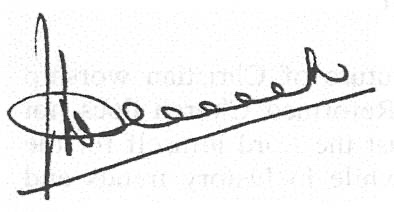
Preamble: Among other things Trowel and Sword was invaluable for informing the denomination what individual churches were doing in their own areas, thus providing the inspiration for others to follow suit. In this article Rev Gerald Hanskamp, possibly best known for his work with the World Home Bible League, now under the name of Bible League International, tells about the effort of a small group of volunteers who spent three days reaching out to the community at the Geelong Show. The group was led by an ordinary, (read: average but dedicated) man, who spent three days working himself to exhaustion in order to bring the gospel to the people of Geelong. His name was Jack Moritz, and if that surname is not familiar to you you haven’t been paying attention. If Jack could do this anyone can. If you currently have a “Jack Moritz”in your church, write in and tell us about it. We are just as happy to print current stories as we are to print articles from yesteryear.

The Stand At The Show

From certain quarters we have been accused of being evangelism-lazy. Reformed teaching, we are told, makes us that way. Yet according to the Canons of Dort we are to be zealous in going out “to declare and publish the promise to all nations, and to all persons promiscuously and without distinction”.

The evangelism material provided by the World Home Bible League has proved to be a great help in various Reformed churches in their endeavours to reach out, in some cases in conjunction with other churches. This could prove to be a break through.

From the Geelong branch we received the following information:  “This year we have had a WHBL stand at the Geelong Show in October. It was a very worthwhile experience for all who were involved in it. No doubt it took quite some organising before everything was under control. We needed a proper stand with a caravan next to it; an amplifier, a tape-recorder, proper lighting etc. We also had to select messages and hymns to be taped; we needed tracts, bibles, sample lessons, plenty of enrolment cards and so on. Space at the Show had to be hired and the “manning” of the stand to be organised. The Youth Club offered help in painting the signs and banners and in decorating the stand.

The show lasted three days. We met all sorts of people. A young American sailor coming from Sydney showed a keen interest. Although his parents attend an Episcopal Church in the States he himself knew next to nothing of the gospel. He knew about Moses because he had seen the film of the Ten Commandments but of Abraham and Paul he had never heard; but he was eager to listen and to learn and he was very happy with the New Testament we gave him. 

A boy of 14 from one of the sideshows, who could not read or write himself, wanted to buy a New Testament for his sister. A drunk wanted to confess his sins in tears. We encouraged him to do so when sober; but his son enrolled for the bible course.

Altogether 50 people enrolled for the bible study courses; we gave 10 Bibles and 50 New Testaments to people who promised to use them well and further we distributed thousands of tracts and enrolment cards. We were not the only Christian movement represented at the show. The “Brethren” were there and some revivalist or pentecostal groups. Some Mormons worked there too.

But we concentrated on Bible distribution. The Word of God is our weapon. Several members of the church took turns in attending to the stand and we had much help from the young people assisting in all kinds of ways. But we need more support particularly from the men in the church. One member (Mr. J.G. (Jack) Moritz), who did most of the organising and was there every night was dog tired on the Saturday night. When he sat down for a while in the caravan a Christian from a nearby church came to encourage him with a good word about Jesus Christ and His Kingdom.

We definitely hope to do this again, possibly in co-operation with other churches. We found it a very effective way of contacting people and confronting them with God’s Word. Our prayer is that the material we distributed, the New Testaments we gave out and the lessons to which people subscribed may be wonderfully used by God”.

So far the Geelong report. We will be happy to hear from others and their efforts under the WHBL scheme.

GERALD HANSCAMP

We look forward to receiving feedback about any of our posts. We also encourage you to share our posts with family, friends and acquaintances; in fact anyone you think may appreciate and/or benefit from the knowledge and wisdom handed down to us from the past.   To view previous posts visit our website at www.tsrevisited.com
Als Er Nog Vijftig In De Stad Zijn

J. Vander Bom. Trowel & Sword, (De Kleine Krant). November 1974

Preamble: Once again we have for your enjoyment an article from the Kleine Krant written in Dutch by Rev. John Vander Bom . As before it is followed immediately after by an English translation for those who cannot read Dutch.

Als Er Nog Vijftig In De Stad Zijn

Dit wordt een kort verhaal over de predikantenkonferentie in Wollongong, die dus toch is door-gegaan. De bedoeling van de vijftig in de titel hierboven kunt u aan’t slot vinden. Ze heeft niets uit te staan met het getal van de konferentie-deelnemers, al waren dat er, welgeteld ook vijftig: 31 pastores, waarvan er 19 hun betere helften hadden meegebracht. ‘t Was heel jammer dat het door de hoge kosten onmogelijk is geweest voor de bewoners van het verre westen om hun vrouwen mee te brengen. Want opnieuw hebben wij ontdekt, hoe broodnodig én vruchtbaar die paar konferentiedagen kunnen zijn om de band en verstandhouding te bewaren.

Want wij hebben wel een uitzonderlijke verscheidenheid in onze gelederen. En dat is mooi en boeiend, maar kan ook spoedig een debet-post worden als wij elkander niet meer kennen. Voorzitter R.O. Zorn kon behalve een paar afgestudeerden van het College in Geelong ook drie nieuwe gezichten uit den vreemde verwelkomen: ds Jack Postma die in de Verenigde Staten tot de reformatorische positie is gekomen, de van Ceylon afkomstige ds Winston Gauder, die in Grand Rapids heeft gestudeerd, en Dr Noel Weeks, uit de presbyteriaanse kerk, die ofschoon hij niet in de aktieve ambtelijke dienst staat, ook een belangrijk aandeel heeft gehad in de diskussies over de prediking en de praktische vragen van pastoraat en psychologie. Van de hoogleraren van Geelong was alleen professor Woudstra aanwezig, die ons erg geholpen heeft op het terrein van jeugd en evangelie. Zelf vertelde hij dat hij zich op dat gebied nooit zo thuis voelde als in het Oude Testament. Jammer genoeg moesten de andere hooggeleerden, ook professor Harman verstek laten gaan. Verder hadden wij deze keer geen gasten, en ook helaas geen vertegenwoordiger van de Nieuw Zeelandse schapenweide.

Wij hadden geen gasten, maar werden zelf wel met onderscheid en als eregasten behandeld. 

Fantastisch, welke mooie vergaderruimtes heeft die kerk van Wollongong ter beschikking! Er was ook een prima verwarming. En de dames der gemeente verzorgden iedere dag een kostelijke lunch. Maar aan het Wollongongse strand werd ons door de jeugd der kerk een barbecue aangeboden, waarvan veteranen als Stuyvesant of Van Raalte gesmuld zouden hebben! En tijdens een van de maaltijden in het prachtige Illawarra bejaardentehuis (waar onze kerk tien units beschikbaar heeft — ja, wie hapt?) werden wij aangenaam bezig door een gitaar trio, ook van de gemeente.

Onze eigen muzikale prestaties werden ruimschoots beloond op de laatste avond, een ontmoeting met de gemeente, die klonk als een klok. U begrijpt het wel: ds Arent de Graaf, ook in de kathedraal van Wollongong geen onbekende, kan geen rust vinden voordat hij iedereen aan het zingen heeft gekregen. Wie had ooit gedroomd van een predikanten-koor? Hij liet ons zingen in alle tongen van mensen en engelen. Nu mag natuurlijk een Duitse, Latijnse or Hebreeuwse tekst voor een dominee geen bezwaar zijn. En zijn vrouw zingt wel mee. . .  Maar het wordt moeilijker als je geen noten kunt lezen. Of, nog erger, als je niet kunt zingen! En toch zongen wij allemaal! Geneefse melodieen, canons, avondgebeden. . . Geen wonder dat de stemming zo goed bleef. Want wij waren heus niet samengekomen in een oase van onbezorgdheid. Maar in ons gezang deden wij belijdenis van wat voor ons allen het hoogste en heerlijkste is. En dan verdwijnen de moeilijkheden, en glijden ook de zorgen en het verdriet van ons af. Zoals een vliegtuig dat omhoogt stijgt de wolken en de bevuilde aarde onder zich mag laten. 

Want natuurlijk, wij waren niet met vakantie. Op de konferentie hadden wij tal van vragen en strijdpunten meegebracht. Of dacht u, dat wij buiten de strijdende kerk konden gaan staan? Maar wij weten ook dat strijd en gebed de lofzang niet uitsluiten. In het strijdperk van dit leven hebben wij immers Gods eigen Woord meegekregen. En iedere dag begon terecht met een tijd van bijbelstudie. En iedere namiddag hadden wij onze gebedstijd.

Het programma was deze keer uitermate praktisch. Prediking en pastorale zorg waren de hoofd-punten.

In een duidelijk exposé over Bijbelse Prediking, aan de hand van de waardevolle studie van de Amerikaanse Sid Greidanus (Sola Scriptura, dissertatie Vrije Universiteit, Amsterdam) bracht ds Pellicaan de bespreking op gang over een onderwerp dat de kerk tot het einde der eeuwen zal boeien. Want door de prediking van het Woord is de kerk gesticht, en heeft zij zich verbreid. En het behaagt de Heer, schrijft Paulus, door de dwaasheid van de prediking mensen te behouden!

De prediker is echter geen automaat, die klaar is met het opdreunen van een aantal gemeen-plaatsen en bijbelteksten. Spurgeon gromde tegen zijn studenten, dat ze beter een christelijk draaiorgel konden kopen: dan kun je afwisselen met vijf verschillende deunen!

Maar wij kunnen ook te veel vertrouwen hebben in onze eigen vindingrijkheid of welsprekendheid. Het is onmogelijk, dat een prediker de indruk achterlaat dat hij een machtig spreker is, en tegelijk dat Jezus Christus alléén groot is, en machtig om te redden en te helpen. Er is een welsprekendheid waarvoor de hemel ons bewaren mag. “De Here was niet in de stormwind.” Wij moeten wel goed beseffen dat de preekstoel al evenmin aan de prediker toebehoort als het doopvont en de avondmaalstafel.

De schrijver van dit verslag had het voorrecht, op de laatste morgen van de konferentie dit thema van de prediking te mogen samenvatten. Het is onze geweldige opdracht, heerlijk en adem-benemend, dat wij aan mensen de stem des Heren mogen doen horen. Zo, dat zij achteraf kunnen zeggen ik heb het zelf uit Zijnen mond gehoord — ik heb vanmorgen de Heer horen spreken! Natuurlijk kan alleen de Heilige Geest deze wondere kommunikatie tot stand brengen. Maar dit betekent stellig geen premie op gemakzucht.

Op de konferentie hebben wij ook een heel gesprek gewijd aan het leven in de pastorie. Mrs. Del MacFarlane gaf de inleiding. Maar in de bespreking die volgde kregen de dames slechts een magere kans. En iemand zei, dat dat maar niet op ‘t bandje moest komen. Want dat was niet voor het nageslacht bestemd! De mannen namen natuurlijk de leiding in de bespreking — Wat is de funktie van de domineesvrouw? Is zij een vrouw in het ambt, hoewel onbevestigd? Ja zeker: zij draagt het algemene ambt, zij is een van de velen in het priesterschap van alle gelovigen!

Bisschop John Reid kwam uit Sydney over om ons te doen meeleven in het onlangs gehouden Internationale Congres te Lausanne, over de Evangelisatie van de Wereld. Professor Runia heeft er in een vorig nummer van Trowel and Sword iets over verteld. En op een bandje konden wij luisteren naar een bijbelstudie van het congres, door de bekende Rev John Stott van Londen. En ook was ds Henk de Waard op een bandje aanwezig, om ons te betrekken in de jongste ontwikkelingen in zijn werk.

Een andere bezoeker was de pas geemeriteerde Rev Neil MacLeod uit Hurstville. De mensen van de eerste generatie emigranten in West Australia herinneren zich hem nog wel! Schots en vurig! Hij gaf een inleiding op de situatie en verwachtingen in de presbyteriaanse kerk.

En wat zal ik nog meer vertellen? Professor Woudstra gaf een leerzame uiteenzetting over het leerprogramma van de kerk, voor jong en oud, binnen- en buiten-kerkelijk. Daar hoop ik nog wel eens op terug te komen. Van ds Keith Warren kregen we een boeiende, sprankelende boekbespreking op de twee veelbesproken Toronto-boeken, Out of Concern for the Church, en: With all the King’s Men. De algemene reaktie op deze boeken, en met name ook van hen die geen hollandse, vechtlustige traditie achter zich hebben, was: Zo Niet! Deze boeken, met hun arrogante, irritante radikale toon hebben onbedoeld een onberekenbare schade toegebracht aan de schone zaak van de christelijke wijsbegeerte. Met het verdrietige resultaat dat een groot en charmant geleerde als Dooijeweerd (lid van de Koninklijke Akademie van Wetenschappen!) door buitenstaanders wordt gedoodverfd als een van de domme radikalen.

Wij hadden een seminarie over moeilijke pastorale gevallen. Met een bespreking van de boeken van Jay Adams. De grote vraag was, of hij met zijn direkte-bijbelse methode geen open deuren intrapt. En of wij de psychiater zo gemakkelijk en straffeloos kunnen negeren als hij doet. Mensen als Bavinck en Brillenburg Wurth zijn zo veel voorzichtiger, en onderkenden toch heus wel de gevaren van de moderne psychologie.

En dan hebben wij ook nog even gesproken over kinderkommunie, het werk van de ouderling en het huisbezoek, de Evangelische Alliantie en het Missie-jaar 1975.

Maar U zult wel hebben opgemerkt, dat ‘t volle, drukke dagen, en korte nachten waren. De tijd, het geld werd goed besteed. En wij zijn dankbaar naar huis gegaan. Het was goed, en brood-nodig dat wij konden samen spreken over de blijvende opdracht van de Bediening van het Woord des Heren aan mensen van onze tijd. Ja, wij waren wel heel erkentelijk jegens de kerkeraden en partikuliere vrienden die dit samenkomen in het jaar van de inflatie hebben mogelijk gemaakt. En wij verwachten dat de

. vruchten van het samenzijn zullen groeien in de gemeentes!

Wij weten, het is zeker niet gemakkelijk om kerk des Heren te zijn, en te blijven in deze eeuw. Wij denken aan het woord van de apostel: van buiten strijd, van binnen vrees. Maar wij mogen ons tevens verzekerd houden van de vele beloften van Hem, Die heerst, ook temidden van de vijanden.

Het is een moedgevend evenement voor ons geweest, dat wij op weg naar de konferentie een zondag in Canberra, de dure en deftige federale hoofdstad konden doorbrengen. Het is ruim twintig jaar geleden dat ik daar een zondag had doorgebracht. En toch herinner ik ‘t me als de dag van gisteren. Canberra was toen nog lang niet aan de twintig duizend inwoners toe. (Nu zijn er bijna twee honderd duizend). lk kwam er nog weleens op country bezoek. En wij hadden besloten, er een zondagse kerkdienst te organiseren. Wat een enthousiasme, toen wij er ruim zeventig bezoekers aan-troffen!

Nooit vergeet ik het gesprek dat ik na de dienst met een veertigjarige huisvader had. Dominee, zo begon hij, wat een geweldige dienst. Wie had ooit zo’n opkomst verwacht? Want, weet u wel — zo ging hij verder, weet u dat het hier Sodom is? Het is hier een verschrikkelijk land. En ik ga hier weg. Om mijn kinderen ga ik hier weg!

Toen heb ik het mijne gezegd. Als hij inderdaad van mening was, dat hij in Sodom woonde. moest hij maar heel vlug de gevolgtrekking maken. Niet langer rondhangen. Maar wegvluchten om zijn leven te redden. En niet achteromzien.

Terwijl er toch naar mijn mening iets tegenstrijdigs was in het feit dat hij nooit gedroomd had dat zulke kerkdiensten hier mogelijk waren. Dus toch géén Sodom? Als er immers nog vijftig recht-vaardigen in de stad zijn die de Heer oprecht willen zoeken dan is Australia nog niet verloren! Zouden wij dan niet liever beginnen om de Heer hier te dienen met een eenparige schouder?

En nu is de kerk in Canberra er gekomen! Ach, de geschiedenis van de kleine groep in de betoverende hoofdstad is ook weer een geschiedenis van veel verdriet en zorgen. Maar er zijn de vijftig rechtvaardigen in de stad. En daarom breken wij niet op, en laten wij de moed niet zinken. En is dit ook niet het beeld van, en de vertroosting voor ons kerkelijk leven in zijn totaliteitsaspekt? Zolang er nog vijftig rechtvaardigen zijn. . . zolang is er het Woord van Hem met Wie wij mogen pleiten! “lk zal de Stad niet verdoen! “

(J) VANDERBOM

If There Are Still Fifty In The City

This will be a short story about the ministers’ conference in Wollongong, which did go ahead after all. The purpose of the fifty in the title above can be found at the end. It has nothing to do with the number of conference participants, even though there were fifty – 31 pastors, of whom 19 had brought their better halves. It was a great pity that the high costs made it impossible for the residents of the far west to bring their wives. Because once again we have discovered how essential and fruitful those few conference days can be to maintain the bond and understanding, because we do have an exceptional diversity in our ranks.

And that is beautiful and fascinating, but can also quickly become a debit item if we no longer know each other. Chairman R.O. Zorn was able to welcome, besides a few graduates of the College in Geelong, three new faces from abroad: Rev. Jack Postma, who came to the Reformed position in the United States, Rev. Winston Gauder, who came from Ceylon and studied in Grand Rapids, and Dr. Noel Weeks, from the Presbyterian Church, who, although not in active official service, also played an important part in the discussions about preaching and the practical questions of pastoral care and psychology. Of the professors from Geelong, only Professor Woudstra was present, who helped us a lot in the field of youth and gospel. He himself said that he never felt as at home in that area as in the Old Testament. Unfortunately, the other professors, including Professor Harman, had to forgo attendance. This time we had no other guests, and unfortunately no representative from the New Zealand sheep pastures either.

We had no guests, but we were treated with distinction and as guests of honour.

The beautiful meeting rooms that church in Wollongong has at its disposal are fantastic! There was also excellent entertainment. And the ladies of the congregation provided a delicious lunch every day. But on the Wollongong beach we were offered a barbecue by the youth of the church, which veterans like Stuyvesant or Van Raalte would have enjoyed! And during one of the meals in the beautiful Illawarra retirement home (where our church has ten units available — yes, who will bite?) we were pleasantly entertained by a guitar trio, also from the congregation.

Our musical achievements were amply rewarded on the last evening; a meeting with the congregation, which sounded like a bell. You can imagine: Reverend Arent de Graaf, also no stranger in the cathedral of Wollongong, can find no peace before he has got everyone singing. Who would have ever dreamed of a choir of ministers? He let us sing in all the tongues of men and angels. Now, of course, a German, Latin or Hebrew text may not be a problem for a minister. And his wife does sing along. . . But it becomes more difficult if you can’t read notes. Or, even worse, if you can’t sing! And yet we all sang! Genevan melodies, canons, evening prayers. . . No wonder the mood remained so good. Because we certainly hadn’t come together in an oasis of carefreeness. But in our singing we made a confession of what is highest and most glorious for all of us. And then the difficulties disappear, and the worries and sorrows also slide away from us. As an airplane that rises upwards may leave the clouds and the polluted earth beneath it.

Because, of course, we weren’t on holiday. We had brought numerous questions and points of contention to the conference. Or did you think that we could stand outside the militant church? But we also know that battle and prayer do not exclude praise. After all, in the arena of this life we have been given God’s own Word. And every day rightly began with a time of Bible study. And every afternoon we had our time of prayer. The program was extremely practical this time. Preaching and pastoral care were the main points. In a clear exposé on Biblical Preaching, based on the valuable study of the American Sid Greidanus (Sola Scriptura, dissertation Vrije Universiteit, Amsterdam), Rev. Pellicaan initiated the discussion on a subject that will fascinate the church until the end of the ages. For through the preaching of the Word the church was founded, and it has spread. And it pleases the Lord, writes Paul, to save people through the foolishness of preaching!

The preacher, however, is not an automaton who is finished with reciting a number of platitudes and Bible texts. Spurgeon growled at his students that they would be better off buying a Christian organ: then you can alternate between five different tunes!

But we can also have too much confidence in our own ingenuity or eloquence. It is impossible for a preacher to give the impression that he is a mighty speaker, and at the same time that Jesus Christ alone is great, and mighty to save and help. There is an eloquence that heaven may preserve us from. “The Lord was not in the whirlwind.” ‘ We must realise that the pulpit belongs to the preacher no more than the baptismal font and the communion table.

The writer of this report had the privilege of summarising this theme of the sermon on the last morning of the conference. It is our great task, glorious and breathtaking, that we may make people hear the voice of the Lord. So that they can always say, I have heard it from His mouth myself — I have heard the Lord speak this morning. Of course, only the Holy Spirit can bring about this wonderful communication. But this certainly does not mean a premium on laziness.

At the conference we also devoted a whole sermon to life in the parsonage. Mrs. Del MacFarlane gave the introduction. But in the discussion that followed, the ladies were given only a meager chance. And someone said that this should not be recorded on tape. Because that was not for posterity intended! The men naturally took the lead in the discussion — What is the function of the minister’s wife? Is she a woman in office, although unconfirmed? Yes, certainly: she holds the general office, she is one of many in the priesthood of all believers!

Bishop John Reid came over from Sydney to let us participate in the recently held International Congress in Lausanne, on the Evangelisation of the World. Professor Runia told something about it in a previous issue of Trowel and Sword. And on a tape we could listen to a Bible study of the congress, by the well-known Rev John Stott of London. And also on a tape was Rev. Henk DeWaard, to involve us in the latest developments in his work. Another visitor was the recently retired Rev. Neil MacLeod from Hurstville. The people of the first generation of emigrants in West Australia still remember him! Scottish and fiery! He gave an introduction to the situation and expectations in the Presbyterian church.

And what more shall I tell you? Professor Woudstra gave an instructive presentation on the church’s curriculum, for young and old, inside and outside the church. I hope to return to that sometime. From Rev. Keith Warren we had a fascinating, sparkling book review of the two much-discussed Toronto books, Out of Concern for the Church, and: Will all the King’s Men. The general reaction to these books, and especially from those who do not have a Dutch, combative tradition behind them, was: Not at all! These books, with their arrogant, irritating radical tone, have unintentionally caused incalculable damage to the fine cause of Christian philosophy. With the sad result that a great and charming scholar like Dooijeweerd (member of the Royal Academy of Sciences!) is being dismissed by outsiders as one of the stupid radicals.

We had a seminar on difficult pastoral cases. With a review of the books of Jay Adams. The big question was whether he was not kicking in open doors with his direct-biblical method. And whether we can ignore the psychiatrist as easily and with impunity as he does. People like Bavinck and Brillenburg Wurth are so much more cautious, and did recognise the dangers of modern psychology.

And then we also briefly discussed children’s communion, the work of the elder and home visits, the Evangelical Alliance and the Mission Year 1975.

But you will have noticed that these were full, busy days and short nights. The time and money were well spent. And we went home gratefully. It was good and necessary that we could talk together about the continuing assignment of the Ministry of the Word of the Lord to people of our time. Yes, we were very grateful to the church councils and private friends who made this gathering possible in the year of inflation. And we expect that the fruits of the gathering will grow in the congregations!

We know that it is certainly not easy to be and remain the church of the Lord in this century. We think of the words of the apostle: without conflict, within fear. But we may also be assured of the many promises of Him who reigns, even in the midst of enemies.

It was an encouraging event for us that we were able to spend a Sunday in Canberra, the expensive and posh federal capital, on our way to the conference. It is more than twenty years since I spent a Sunday there. And yet I remember it as if it were yesterday. Canberra was then not even close to twenty thousand inhabitants. (Now there are almost two hundred thousand). I still visited it occasionally on country visits. And we had decided to organise a Sunday church service there. What enthusiasm, when we found more than seventy visitors.

I will never forget the conversation I had with a forty-year-old father after the service. Reverend, he began, what a great service. Who would have ever expected such a turnout? Because, you know — he continued, do you know that this is Sodom? It is a terrible country here. And I am leaving here. For the sake of my children I am leaving here!

Then I said what I had to say. If he really thought that he lived in Sodom, he should quickly draw the conclusion. No longer hang around. But flee to save his life. And not look back. While in my opinion there was something contradictory in the fact that he had never dreamed that such church services were possible here. So, no Sodom after all? If there are still fifty righteous people in the city who sincerely want to seek the Lord, then Australia is not lost yet! Would we not rather begin to serve the Lord here with a united shoulder?

And now the church in Canberra has come! Ah, the history of the small group in the enchanting capital is also a history of much sorrow and worry. But there are the fifty righteous in the city. And therefore we do not break up, and we do not lose courage. And is this not also the image of, and the consolation for our church life in its totality-aspect? As long as there are still fifty righteous. . . as long as there is the Word of Him with Whom we may plead! “I will not destroy the City!”

VANDERBOM

We look forward to receiving feedback about any of our posts. We also encourage you to share our posts with family, friends and acquaintances; in fact anyone you think may appreciate and/or benefit from the knowledge and wisdom handed down to us from the past.   To view previous posts visit our website at www.tsrevisited.com
A Woman’s View On Ordination

Diane Brummel Bloem. Trowel & Sword. August 1975.

From: The Banner.

Preamble: As you can tell by the date of this article, this debate has been going on for a long time and would seem to be no closer to being resolved. For the most part there seems to be an uneasy truce between the opposing view points, but still the debate continues. While it often seems to be a male versus female issue (these days also complicated by the “trans” debate), there are men and women on both sides of the divide. The following article gives one woman’s view on the ordination of women. Let it be said that there will be those that agree and those that disagree with her arguments. To us the sad fact is that most people in the Reformed churches are so entrenched in their own opinions that they will never accept the viewpoint of the other side. Also scripture itself would seem to be sufficiently ambiguous to allow a case to be made both for and against. And so, the debate goes on.

A Woman’s View On Ordination

I am a woman speaking out against the current trend in the church to ordain women to the ministry. 

If you are a man, before you say, “Aha, the women are finally getting some sense,” let me ask you to take a few minutes to consider some ideas with understanding and Christian love.

If you are a woman, do not think that I am betraying you. I believe that I have been given some answers and some challenges. Please consider them with me.

Already as a little girl considering career opportunities I wondered why the ministry of the gospel was stressed as an option for boys and not for girls.

After all, I loved to study the Bible, to analyse church doctrines and church history. I had an intense love for people, joy and confidence in my own salvation – all these plus a gift for public speaking. Why, I wondered, would God give talents and a desire to use them to one of His children and then say, “No, I don’t need or want your service because I made you a woman?”

These questions did not shadow my life with sadness. I had loving parents, teachers, friends who encouraged me to serve the Lord in every aspect of life. I was happy. The Lord gave me a wonderful Christian husband, precious children, a home filled with love. I felt a little sorry for men that they could not know the joys a happy Christian homemaker revels in. My family encouraged me to continue my education and God called me to a thrilling ministry in the church. I began studying and serving as Bible leader for women’s societies in several of our churches.

Then came the Women’s Liberation Movement. Magazine articles insistently and insidiously

asked me if I was really fulfilled. I began to wonder. My glow of happiness was tarnished. I began wondering why the institutional church used so few of women’s talents. Was it because the chauvinistic consistory felt that women were inferior to men? I began to bristle. When a few ministers were reportedly hurt because the women’s group in their congregations wanted women leaders I was bit indignant.

I needed answers from God, so I turned to His Word and with women’ groups in four churches began to study the role of the Christian woman. What beautiful answers we were given!

First of all we saw that men and women are equal before God – equally sinners and equally saved. Then we began to explore the unique purposes and tasks God had for men and for women. We saw the beauty of order He established in delegating authority to the man as the head and to the woman as his co-worker.

We looked at the criticisms the women’s libbers were firing at the Bible, blaming it for our so-called inferior state. We found that, rather than illustrating the suppression of women, Bible history demonstrates the opposite. The daughters of Zelophehad pleaded for the right to own property and God Himself granted it. Miriam was one of the highest leaders of Israel; Deborah was a judge; Huldah was a prophetess – chosen to reveal the word of the Lord. The picture of the virtuous woman in Proverbs 31 is of a fulfilled woman, a homemaker and a career woman.

In the New Testament we were thrilled to see how Jesus ignored the social customs of His day and taught women as well as men. He encouraged Mary in her desire to learn spiritual things; He revealed Himself as Messiah to the woman at the well. Paul stressed equal rights for women in the marriage relationship (I Cor. 7:5) and time and again showed his warm appreciation for the work of women in the church. We learned that Peter shared his ministry with his wife (I Cor. 9:5) and Paul seems a bit envious. We learned that the gifts of the Spirit were given to women as well as to men.

And although we found numerous instances in both Testaments in which the gift of prophecy was given to women, we did not find that God called them to the office of bishop or elder. Their calling was directed more to working as the complement of their office-bearing husbands or as a leader of their fellow-women. More important than all of this to me was I Corinthians 11:3, “But I want you to understand that the head of every man is Christ, the head of a woman is her husband, and the head of Christ is God.” Why are Christian women chafing at the idea of subjection when Christ, our Saviour and example, though claiming equality with God (John 5:18) was willing to put all His glory aside for the privilege of serving?

Philippians 2:5 and 6 says it all, ‘Have this mind among yourselves, which you have in Christ Jesus, who, though he in the form of God, did not count equality with God a thing to be grasped, but emptied himself, taking the form of a servant, being born in the likeness of men’. I asked myself, “Am I better than my Lord?” If there is this beautiful order of subjection in the Trinity, reflected in the order of authority and subjection on earth, why should this grain of discontentment be harboured in my mind? Can it be that the Women’s Liberation Movement is blinding the eyes of Christian women to the calling to serve? Is the devil using this in the same way he used the piece of fruit with Eve?

Why is it that one denomination after another is bowing under pressure to ordain women? Is the Lord calling these women to serve as ministers because men have failed, or are women grasping for this calling to honour themselves and their sex? Jesus’ warning comes to us as it did to His disciples (Matt. 23:11,12), “He who is greatest among you shall be your servant; whoever exalts himself will be humbled, and whoever humbles himself will be exalted.”

If you are a woman, consider the many fulfilling ministries to which God may have called you. You may be called to be an understanding Bible leader, a sharing student in a study class, a loving Christian neighbour or co-worker, a church-school teacher, a missionary, a Calvinette leader, a minister of mercy, a minister of encouragement, a prayer warrior, an understanding listener, a missionary union leader or supporter, a Christian writer or editor, a complement and support to your husband. The unique calling to the ministry of Christian motherhood cannot be lumped with all other womanly callings. It is too special and too necessary and too endangered. It is a woman’s crowning calling.

All of these callings and the hundred more you can think of are callings to serve the Lord with all of your talents, education, intelligence, insight, understanding, and love. Each is a worthy challenge and in no way inferior to the unique tasks given to men. Do not disparage your calling. God made you a woman because He had special service in mind for you.

If you are a man, please ask yourself if you are in any way responsible for the discontent brought about by the Women’s Liberation Movement. Are Christian women dissatisfied with their calling and looking enviously at yours because you really consider them to be inferior? Do you realise and appreciate the special faithful work women do to keep our Christian lives growing spiritually as well as physically? Do Christian women know that you honour and appreciate their gifts and callings? Are you encouraging them to use their talents? Or do you suppress them because you are more interested in exalting yourself than in being a servant to your Master?

Perhaps all of us, men and women, must experience a renewed calling to serve one another. After giving advice to husbands and wives Peter concluded, “Finally, all of you, have unity of spirit, sympathy, love of the brethren, a tender heart and a humble mind” (I Peter. 3:8,9).

DIANE BRUMMEL BLOEM

We look forward to receiving feedback about any of our posts. We also encourage you to share our posts with family, friends and acquaintances; in fact anyone you think may appreciate and/or benefit from the knowledge and wisdom handed down to us from the past.   To view previous posts visit our website at www.tsrevisited.com

Rumour Round The College

Rev. Bill Deenick. Trowel & Sword. November 1974

Preamble: I must begin by declaring my own interest in the events described in the following article. I was a student at the RTC at the time that these events took place and was recorded in the minutes of a student meeting as the lone voice opposing an action by the students which sought to petition the Board of Directors regarding the teaching of Dr. Woudstra. Revisiting this article may well be seen by some as reopening old wounds, however this is not our intention. Its purpose is twofold. Firstly it is to remind us that the history of the CRCA, and by extension the RTC, has not always been plain sailing and that there have been many bumps along the way. More importantly, it is to remind us that the RTC does not belong the the CRCA but was set up as an independent institution for the training of men and women in the Reformed tradition; this being a first step in the eventual establishment of a Christian/Reformed University. In many ways it has also served as a model in the setting up of Christian schools around the country. (Bert)

Rumour Round The College

In the circle of its friends and supporters the Reformed Theological College is very much a topic of discussion and controversy at present; and not for the best of reasons. Many have asked questions; others have expressed concern and disappointment; some confess to being very angry.

The issue that has caused the commotion is a decision by the Board of Directors (BofD) to terminate the professorship of Dr. S. Woudstra. Dr. Woudstra has been loaned to the college by the Christian Reformed Board of Foreign Missions, and after having been in charge of the O.T. department since late 1972 he has been lecturing systematic theology since the beginning of this year. Since T&S has been in close fellowship with the college ever since its establishment it seems proper that we should comment on these events.

The BofD has published a statement on its decision, a copy of which the sessions and the individual members of the association will have received.

Before anything else, however, a few points should be made clear concerning the character of the college as an independent institution and concerning its relationship to the churches that co-operate in it.

1. The R.T.C. is an independent college; in fact it is the theological faculty of what is hoped to be in God’s time a Christian University. It was always meant to be independent. If the Australian Reformed Churches had wanted to establish a church-controlled seminary they could have tried, and might have succeeded, to do so. But they never did, and they never wanted it that way. The first president of the BofD. was a minister of the Reformed Presbyterian Church and from the start the principal of the College has been Prof. A. Barkley, also a minister in that church. The college always hoped to attract a wide range of students and when last year the (Free) Presbyterian Church of Eastern Australia decided to co-operate within the RTC and use it as the institution for the training of its ministers we were happy not only because this would mean an expansion of the college community but also because we saw in it a further step forward in Reformed ecumenicity, i.e. in making the RES fellowship between the Reformed Presbyterian Church, the Free Church and the Reformed Churches more meaningful.

The reformed ecumenical character of the RTC has been an essential aspect of the institution from the very start. The men who originally established the college were not narrow minded men. They saw the vision of a reformed theological training centre that could serve the orthodox reformed and presbyterian community in this country.

It is clear from the more recent history of the college that the men now responsible for its direction are not prepared to deviate from that policy. It has been firmly established in the constitution and the college has been blessed that way.

Those in reformed circles who would want to reverse that direction and would prefer a nice little seminary of our own with half a dozen students and one or two professors whom we could press to our heart and call our very own, have the right to make a proposition to that effect in the councils of the church, and the church could then decide upon it; but they must be well aware of the consequences of such a policy. Other Reformed and Presbyterian Churches would have the right to do the same and soon we could boast of three to seven miniature seminaries in this country all claiming to represent the Reformed Faith. Our dividedness would be shamefully confirmed by it. The men who established the college never wanted that and T&S will never support it.

Naturally, co-operation in a college like the RTC means certain sacrifices but the measure of unity that we have in the college is worth these sacrifices.

That there is a place and a future for this type of co-operation and for this type of college is clear from experiences also in other parts of the world. Elsewhere in this issue we publish a few RES news items, that deserve to be taken note of, concerning the Westminster Seminary at Philadelphia and the Reformed Theological College at Jackson, Miss. (where Dr. G. VanGroningen works).

2. That the RTC is an independent college also means that we must respect the authority that the institution has in its own affairs. The men appointed to exercise that authority are bound by the constitution under which they have been appointed. In the matter of professorial appointments and doctrinal supervision the churches co-operating in the RTC have (through their synodically appointed deputies) certain rights, privileges and obligations, stipulated in the constitution; but the final decision rests with the BofD. It is quite out of the question that local sessions or individual members of the association could have a say in such appointments. The evaluation of a professor’s qualifications (academically and otherwise), of his place in and his contribution to the college and of his doctrinal standing within the RTC is not the responsibility of any local church or any individual. It is the responsibility of the BofD which receives advice from church representatives and from the faculty.

In Dr. Woudstra’s case this means that the final decision re his professorship at the RTC is no one’s responsibility but that of the board.

3. One more question comes up in this connection. How far reaches the validity of a pronouncement by the BofD concerning a man’s orthodoxy? Obviously it has validity within the context of the RTC, but in the church it cannot have any authority. Yet, a man’s reputation in the church could be severely damaged by it. He stands accused before his case has been dealt with properly in the councils of the church. It seems necessary then that at this point (as well as at others) the constitution of the RTC be looked into carefully.

The evaluation of the work of a professor or a lecturer is properly within the jurisdiction of the BofD; and many different aspects of his work, also its doctrinal aspect, will come up for examination. But the authority to make (and to publish) a verdict on a man’s orthodoxy can (it seems to me) never rest with a non-ecclesiastical body. The present board has acted wholly within the limits of the constitution, but the constitution may well need revision at this point.

As far as Dr. Woudstra is concerned good order and fairness require that the church holds him innocent until the church finds him guilty if it finds him guilty. In what manner the church should act in his case is to be decided upon by the classis of the Reformed Churches in Victoria.

4. In reformed circles the question has been asked what in the present circumstances has been left of the (Dutch) Reformed contribution to the college. At this point many feel deeply disappointed and some refer cynically to the RTC’s finances and properties as the only contribution still expected from their side.

Understandable as this reaction may be, it is not fair to ignore the fact that the real reason for our troubles is the theological confusion in which the (Dutch orientated) Reformed community finds itself. This is not the mistake of the Reformed Presbyterians or the Free Presbyterians but of the Reformed theologians (in the Dutch tradition) themselves. That the many and consistent efforts by the BofD to attract Reformed theologians, suited for a small college of the character of  the RTC and willing to come, have been so unsuccessful has most certainly not been the mistake of the board or of anyone else connected with the college.

At the invitation of the Christian Reformed Mission Board Dr. Woudstra was prepared to come and teach here. For them it was not an easy decision to make. For us it was an answer to prayer. That his teaching and his position at the college have run into the present difficulties is a distressing disappointment for all and every one in the RTC; but it is not unrelated to the general state of uncertainty in (Dutch orientated) Reformed theology, for which no one in the Presbyterian world can be blamed and in which we in Australia do not want to be involved.

5. On the personal level the whole affair has caused very deep discouragement and bewilderment to Dr. and Mrs. Woudstra. In different ways they have become the victims of mistakes made in the College community. All this is the more disappointing since Dr. Woudstra had come to love his work here; while in the church his person and his ministry found ready acceptance.

6. Can the difficulties still be solved without dividing the college or jeopardising its doctrinal integrity? In order to answer that question we would have to know all the details and circumstances. But that is not really our business. It is the board’s business.

The church’s business is to maintain its own doctrinal honesty and its unity; and, in this case, to see to it that justice is done to Dr. Woudstra re. his standing in the church.

Finally, through experiences like these we discover again that even with the best of intentions and with mutual love and respect we do not necessarily solve theological problems and that the welfare of a theological college is not safe in the hands of theologians, deputies or directors but only in the hand of God our Saviour.

BILL DEENICK

We look forward to receiving feedback about any of our posts. We also encourage you to share our posts with family, friends and acquaintances; in fact anyone you think may appreciate and/or benefit from the knowledge and wisdom handed down to us from the past.   To view previous posts visit our website at www.tsrevisited.com

Leave a comment

Ten Years Of Trowel And Sword

Dr. K. Runia. Trowel & Sword. October 1964

Preamble: When we first saw this article it seemed like a good idea to save it for our own tenth anniversary – a mere eight and a half years down the track. This begged the question, Will the Lord grant us another eight and a half years just so that we could print this article? So here it is. An honest appraisal of what had been achieved so far; a desire for continual improvement, and an assessment of how invaluable T&S was, not only to members in the Reformed Churches but to a growing number of subscribers from outside the denomination. Trowel and Sword continued for another forty-six years. One might say a good innings. And yet it was, and is, also sad that it had to end. What have we lost? We believe, a great deal. We continue to hope that it can yet be resurrected in some form. We fear that if it can not, then it is not beyond the realms of possibility that the day may come that the whole denomination will go the same way. In the meantime, we will continue revisiting articles from the past with the weekly TSR, outlining the hopes, beliefs, aspirations and drive of a past generation of believers and their leaders.

Ten Years Of Trowel And Sword

The present issue is the first of Volume XI. That means that we have completed ten years of ‘Trowel and Sword’. We shall not try to give a survey of the history of our magazine (perhaps there will be an opportunity for this later on), but we would rather express our gratefulness to the Lord for His blessings bestowed upon this labour. In many respects it is surprising that ‘Trowel and Sword’ has continued to exist and even managed to grow, through all vicissitudes. And we can only say with the Psalmist: “Not to us, O Lord, not to us, but to thy name give glory, for the sake of thy steadfast love and thy faithfulness” (Ps.115:1).

There can be no doubt that a denominational magazine is of great importance for a church. It is one of the ties that bind us together, It provides means of communication which do not exist otherwise. It gives possibilities of instruction which a local paper can never supply. I think I may say that in the course of these ten years ‘ Trowel and Sword’ has obtained a firm and familiar place in our church life.

But the importance of our magazine exceeds the bounds of our own churches. In the first place, there is the slowly growing number of subscribers not belonging to our Reformed Churches. In the second place, there is the factor of exchange subscriptions. Editors of other papers receive our magazine and read it, as appears from quotations from ‘Trowel and Sword’ in their papers. Occasionally one finds news and articles from ‘Trowel and Sword’ reproduced in such papers as ‘Centraal Weekblad’ (The Netherlands),

‘De Wachter’ and ‘ The Banner’ (U.S.A.), Church and Nation (Canada), The Irish Evangelical, and others.

When we mention these things, we do not mean to say that we have already reached our goal. In honest truth, ‘Trowel and Sword’ is still imperfect in many respects. Much can and must be improved. The editorial committee is aware of this and it is constantly trying to find ways and means for these improvements. One of the great obstacles is, of course, lack of finance. At the moment we can just manage, financially, but if we want to do more, we need more subscribers. We would ask all our readers to help us by recommending our paper to others, both inside and outside our churches. Please, do not throw your old copies in the waste paper basket, but pass them on to others, The printed word is still one of the most influential means for propaganda (sic).

In the meantime we hope to go on, doing our utmost to make our paper interesting and relevant. We cannot show our thankfulness for the blessings of the past better than by doing our best in the present and working hard for the future. May the Lord bless our efforts and enable us more and more to make ‘Trowel and Sword’ what it wants to be: A periodical for the EDIFICATION and DEFENCE of the REFORMED, PRESBYTERIAN FAITH AND LIVE in Australia and New Zealand.

K. Runia

We look forward to receiving feedback about any of our posts. We also encourage you to share our posts with family, friends and acquaintances; in fact anyone you think may appreciate and/or benefit from the knowledge and wisdom handed down to us from the past.   To view previous posts visit our website at www.tsrevisited.com

Leave a comment

Worship As Dialogue

Bill van Schie. Trowel & Sword. March 2003

Preamble: Last week, despite our “tongue-in-cheek” description of the approach of many people to attending a church service, we learned from Bill that attending a church service is serious business. How serious? Imagine the following scenario. The last day has arrived and all people have been raised from the dead and been joined by those who were still alive at the time of Christ’s second coming. All have been called before the throne of God. Are you rejoicing or are you terrified at what is about to take place? Now wind the clock back to the present. Same scenario. You are entering your place of worship – entering into the presence of God. Is your attitude one of deep reverence and respect or more a casual one of: “Well, I’ve done done church for another week. Now I can go out and enjoy myself and do what I want?” It boils down to this: Is God real for you?

Worship As Dialogue

Last month we saw that worship, to be truly worship according to the Biblical definition of the word worship and following the meaning of the English word itself, must always be God focussed. We saw that worship must never be human emotion centred. Or even human mind centred. Or congregational experience centred. For worship to be truly worship it must be focused on God whom we honour and on whom we declare worth.

But then the question can be raised, “What about those aspects in the worship service where we receive from God and we learn?” Is that not worshipping as well? How does the dialogue principle fit into this definition of worship?

The dialogue principle has been accepted as a Biblical concept and closely followed by the Reformers. In short the dialogue principle teaches that corporate worship is a conversation between God and us. That God speaks to us in the worship service and that we respond. In the Reformed understanding of worship we recognise four significant points in the worship service where God speaks and we respond.

The first is in the “Greeting”. God begins the worship service by beginning the conversation with His greeting. God welcomes us into His presence and invites us to worship Him. The traditional wording often used is taken from Ps. 124:8, Phil. 1:3 “Our help is in the name of the Lord, who has made heaven and earth. Grace to you and peace from God the Father and the Lord Jesus Christ.” The worship aspect is our response to God’s greeting. We declare our dependence on Him and we honour Him for who He is.

The second significant point of the conversation between God and us is the “Assurance of Pardon”. In the assurance of pardon God shows us through the summary of the Law that we are sinners. Then God assures us through a suitable Scripture verse the forgiveness we have in Christ. God then instructs us through the Ten Commandments or another suitable reading how we should live in gratitude.

The worship aspect in this section is twofold. We worship in the way we humble ourselves in confession and repentance and in the way that we rededicate ourselves to live in gratitude. This worship can be through prayer or song.

The third significant point of the conversation between God and us is in the “Preaching of the Word”. God speaks to us when the word is opened and expounded. The Spirit then does his work of illumination, correction, guiding and encouraging.

The worship aspect in this section is also twofold. The way we listen and open our hearts, minds and will to receive that word reveals our attitude of worship. The way we dedicate ourselves and commit ourselves to put that Word into practice is also an act of worship.

The fourth and last point of conversation between God and us in corporate worship is the “Benediction”.

It is in the Benediction that God blesses us with a farewell promise that He goes with us into our lives and into the world. The Benediction is the link between the worship service and our daily lives.

The worship aspect in this section is when we go out with a believing heart and go rejoicing leaving one presence of God in a corporate context for another in a more individual context.

Looking at the above we can see that the dialogue principle of corporate worship confirms our previous definition of worship. That worship must at all times be God focussed. When God speaks and declares his forgiving, grace empowering love to us in the greeting, in the assurance of pardon, in the Word and in the Benediction, it is then that we respond in worship.

Worship therefore must always be God focussed.

As it says in Psalm 100:1-3

Shout for joy to the LORD, all the earth. Worship the LORD with gladness; come before him with joyful songs. Know that the LORD is God. It is he who made us, and we are his; we are his people, the sheep of his pasture.

The question can then be raised, How does this work in practice? Well next month we will examine this a little more closely by looking at different ways of doing the “Greeting”.

Bill van Schie

We look forward to receiving feedback about any of our posts. We also encourage you to share our posts with family, friends and acquaintances; in fact anyone you think may appreciate and/or benefit from the knowledge and wisdom handed down to us from the past.   To view previous posts visit our website at www.tsrevisited.com

Leave a comment