The Crisis and Challenge of a New Era

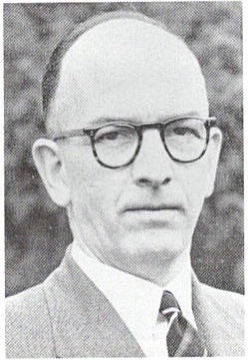
DIRK VAN GARDEREN, T&S, December 1976

Preamble: In this essay Dirk looks at various aspects of church growth from the early days of the Reformed Churches and the need to reassess methods of evangelism 25 years later as the demographic of the church has changed. It is now almost another 50 years since his article appeared in T&S. Has anything really changed or are the circumstances as described by Dirk in 1976 regarding evangelism and church growth still the same today? Are we a vibrant, growing denomination or have we fallen asleep at the wheel? It always strikes me as a sad reflection on the state of the church and the society we live in that there are so many empty church buildings which have been converted to housing or business premises and no longer used as places of worship. As the population has grown, churches have shrunk and closed. Dirks challenge to the church 50 years ago are just a relevant today. Can we move forward by learning from the lessons of the past?

The Crisis and Challenge of a New Era

The Reformed Churches of Australia and New Zealand are entering into a new era which urgently demands recognition and assessment.

The recognition and assessment of this new era is urgent because, whether we see it or not, we stand at a cross road which offers us two choices. The one road is the one shared by various migrant orientated churches that our country has seen and where we witness a slow, agonising stagnation, a gradual decline and copping out in spiritual life, and finally a membership that bases its right to existence solely on the once glorious past of the fathers and grandfathers of a bygone era. This road is common and broad! I well remember the visit of an elder of an Hungarian Reformed church here in Adelaide. He spoke of a group which, some thirty years ago, had been a vital, living witness. Now however, it consisted only of few ancients vainly trying to reintroduce the Hungarian ecclesiastical language to a group of youngsters who never came.

The other road is one of vitality, relevance and a spiritual impact that by grace and for grace binds, involves and grows.

Which road would our denomination wish to walk? We all know which one it should be. Dare we explore it, and are we able to recognise and plan for it?

A NEW ERA HAS ARRIVED

During the past half decade or so the Reformed Churches have been undergoing far-reaching changes. In isolation they seemed of little import, but combined they have altered the structure and impact of the church.

What are these changes?

1. We are no longer primarily a migrant orientated and assimilating community. For better or for worse, the main source from which we once drew our new members, namely the churches in the Netherlands, has dried to an insignificant trickle. The result is that whereas we were formerly very actively engaged in the task of migrant reception and assimilation in a foreign land, we are now idle in this. The task has largely been completed. Witness the defunct “sponsoring committees” which once played an important part in our church life.

2. We have, by and large, completed the work of building churches and manses. Working bees, building committees, the sacrifice of countless hours which once kept us busy in a most demanding way provided and achieved a real goal. The young people have “inherited” the fruit of these labours and must therefore look elsewhere in church life for meaningful work and sacrifice.

3. We are witnessing the rise of a new Australian born or bred generation to adulthood. Their “newness” is seen in a different approach to and relationship with the church. They do not need the church community in the same sense as their parents did. The ethnic, cultural and language bond which served to cement our fellowship no longer plays such an important role for these younger people. At the same time, this new generation wants to flex its spiritual muscles in new directions. But where and how? The truth of the matter would seem to be that this very generation upon which the founders of the denomination staked their future hope are currently regarded as apathetic and seen to drift away from the church.

4. Statistically we could look at the figures displayed in our current yearbook. Here we find that church growth hardly keeps up with natural growth. Why, for every two people baptised, only one person makes a profession of faith and the latter include those who join the church by means of a evangelism. All this holds true in spite of the Cadets, Calvinettes, Sunday School and Catechism classes for our own children. It is true in spite of our new generation not having any language hangups or a migrant mentality. It is true in spite of the fact that we are busily engaged in evangelism work such as Vacation Bible Schools, Literature distribution campaigns, Back to God Hour and even door to door visitation.

Much more could be said, but let us see these points as being brightly illuminated sign posts standing at the crossroads.

CHALLENGE OF A NEW ERA 

The situation described above forces us to acknowledge the critical nature of the new era. What is the challenge? What are the solutions which need be applied? Is there a definite and practical course to follow for the future?

I believe that, in dependence on the sovereign grace of God and to His glory, there is. It is a course of action that takes into account two mutually dependent, yet distinct factors. Consider them:

First, the struggle for identity. Here the course to follow aims at coming to terms with our particular identity as a Bible believing and based Christian Church. This course must be defined even more sharply in terms of our uniquely REFORMED character within the spectrum of so-called “protestant” Christianity,

Secondly, we need to come to terms with and find a real and meaningful method of evangelistic outreach and Church growth. Its the METHOD that needs to be discovered and implemented, a method that takes into account both our own identity as REFORMED churches and the uniquely Australian character of our nation.

Consider these factors separately but do not overlook the fact that both are mutually dependent and, although theoretically discussed in isolation one stands or falls in connection with the other.

1. REFORMED IDENTITY MUST BE REDISCOVERED 

Our release from the migrant oriented tasks as described above has resulted in making the members of our churches much more sensitive to and conscious of others. The subtle pressures of the Evangelicals and more especially the Charismatics have led to some remarkable developments in our midst.

a) There has been an increasing stress on holiness and personal piety. Within the context of a true Biblically based faith there is nothing wrong with this. However a problem arises when holiness and piety are regarded and approached as being in direct contrast with the lifestyle of the hardheaded arrogant and cigar-smoking Dutch Calvinist with his frosty doctrine of double predestination. Calvinism and holiness/piety have come to be seen as water and fire, and the one is sure to douse the other. What, it is felt, has dogmatic Calvinism in common with real Christian experience, piety and a striving for holiness and tenderness?

Can you see what happens? The holiness and personal piety so strongly characteristic of the Evangelicals and the Charismatics in practice thrusts Reformed theology into the background and even rejects it! Given this dilemma, our identity as a REFORMED church becomes hazy and is thrust into the background. A crisis of identity results.

The task of the pulpit, the catechism class and Bible study circles becomes most pronounced and specific.

b) Another pressure brought to bear upon our church community is one for SIMPLICITY. This is the simplicity that calls for “no creed but Christ”. Within this context we hear calls which inform us that all one needs to know is the Gospel, that Christ died for you and that in return He demands a life of obedience and service. Babes and infants, the unsophisticated little old lady and her faith are contrasted to the heavily dogmatic, oft theoretical doctrinal emphasis of the Reformed faith. How prevalent the attitude “as long as you know Jesus as your Saviour you can forget about total depravity, unconditional election, limited atonement, etc.” Three syllable words are anathema. Sermons fall victim to these increasing pressures and ears automatically close off.

No, this is not a figment of fantasy. The result again means that our Reformed identity falls by the wayside and we are at loss to understand why the Reformed Churches exist as a separate denomination.

See the task that confronts us?

c) The third type of pressure brought to bear is one often heard on TV or read of in the papers. People try to create a Church, critics try to create a sense of shame regarding the history of the church and its lack of action. Crusades against the Moslems, religious wars, persecution by the Church of heretics, etc. are brought in. Ireland, Lebanon and the Spanish inquisition. The church has failed to love its neighbour and ought therefore to get away from its bickering about doctrinal differences and concentrate on practicing love. “It is not so much what you believe, it is all a matter of what you do sincerely!” By their works you shall know them.

Now, even if we see through this we may nevertheless look with askance at the performance of the Church in terms of spiritual impact on the community. So little of it. The result is that we blame the rock-hard Calvinism with its accompanying slogan “in isolation our strength”, Again, in creating a dilemma, no matter how false, the Reformed faith is thrust into the background and a worsening crisis of identity results.

In suggesting that we are faced with a crisis of identity it becomes clear that the situation must be tackled in terms of a revival of REFORMED FAITH and PRACTICE! Rather than allow for the conscious or unconscious contrasting of Reformed theology with holiness, piety, simplicity and impact of faith, we must instead seek to rediscover their relationship. We need to look for and rediscover a particular theological identity which understands and loves the Reformed faith for what it really is.

2. THE DISCOVERY AND IMPLEMENTATION OF A METHOD OF CHURCH GROWTH

Nobody disbelieves the need for an evangelistic programme as part of church life. Church growth is an essential ingredient for the future of the Church. In actual fact, as Reformed Churches we have tried diligently to implement a wide variety of methods. What about results? Well, they are fully dependent upon the sovereign, irresistible grace of God, aren’t they?

But can we leave it at that?

Consider the following:

a) There has been a tendency to separate evangelistic outreach from church growth. It may well be a legacy of the Billy Graham crusades that we often hear it said that all that needs be done is simply (1) call a person to Christ and then direct this person back to his church of origin. But is this necessarily a proper procedure? Could it be that there are other reasons for adopting this approach? It is not uncommon to hear of a sense of reluctance to inviting people to join our church. The idea that Reformed preaching is too difficult or that a new convert would fail to feel at home is far from rare. Added to this is a lack of conviction concerning the Reformed faith (including the five points of Calvinism) which fails to make us convincing ambassadors for our denomination. Call to Christ but not to the Reformed Church! What basis have we for this separation of evangelistic outreach from church growth?

b) There also seems to be something missing or even wrong in terms of our method of church growth.

There have been the programmes for evangelism by means of Vacation Bible Schools, stands at shows, Sunday school, literature distribution. One man sows and another reaps as God gives the growth? But why should our church imagine itself to be sowing only and leaving reaping to others? Is that Scriptural?

There are currently a host of books written on methods and principles of church growth and the results mentioned make interesting reading. Again they beg the question, why does outreach, by the grace of God, work in some areas and churches and not in others? Is it a matter of God’s grace bearing fruits in some churches and not in others, or is it a matter of method as well? Have we a method suitable to our own particular character as a Reformed Church?

In the above considerations a number of questions are raised and they deserve an answer. There is a need to tackle and discover a method of church growth. A matter of survival which, in dependence on God’s grace must be tackled prayerfully, urgently and earnestly NOW! How? Study and practice! May I suggest the following:

1. That as a denomination we pool our insights on a methodology of Church growth. Let the subject become a matter of urgent study and perhaps even become a regular feature in the pages of “Trowel and Sword”.

2. That various groups of people, especially the younger generation, organise themselves to study the question of method and to implement it, to publicise their findings and circulate their trials and triumphs.

A booklist that T & S readers may find worthwhile consulting would include the books of: Paul E. Little: How To Give Away Your Faith; Know WHAT You Believe; and Know WHY You Believe; The earlier books of Roland Allan: Missionary Principles; Paul’s Missionary Methods and Spontaneous Expansion of the Church; D. James Kennedy: Evangelism Explosion, and This Is the Life: and W. Arn & McGavran: How to Grow a Church.

DIRK J. VAN GARDEREN

Shall We Adopt The New Or Maintain The Old?

Preamble: When Abram answered God’s call to pack up his family and his belongings and move to another land, he did so without hesitation. But at the back of his mind he no doubt asked himself the same questions that many immigrants asked themselves when they landed on the shores of Australia or New Zealand some seventy years ago, and continue to ask on arrival today. “Now What?” Do we live as strangers in a foreign country, or do we follow the adage, “When in Rome, do as the Romans do”? This in essence, is the question asked by a reader back in 1957. As you read this letter, think about what your response would have been to this reader. Maybe you have been in the same situation. What was your solution to this question? With hindsight, did you make the right decision? What do you advise newcomers to your church who come from a different background or culture?

If you have some words of wisdom to share with our readers, please write to us and share your thoughts. Also, please indicate whether you are happy for us to publish your story. Names will not be published unless you expressly give permission for your name to be included.

From Our Readers: SHALL WE ADOPT THE NEW OR MAINTAIN THE OLD? Trowel and Sword. February 1957

A wise man said: “The life of an immigrant is to compromise between adopting the new and maintaining the old”.

At one side, the circumstances we live in, press us to do away with many customs we were used to. At the other side, it is necessary to keep up the spiritual inheritance of our fathers, to stick to those ideas which are the backbone of our life.

When our first Dutch immigrants came here some six years ago, they were told to forget about all things behind, and to adopt the so called “Australian way of life”. Later on, this idea was replaced, also by our Australian friends, by: better not to put away TOO MUCH, but to assimilate into the Australian world carrying with us those good old principles, and to enrich the country we are now living in.

To compromise now, is to put away so much of our old customs etc. as we can dispose of without causing damage to our lives, and to keep up and bring into this new country of ours those old and true ideas which are really part of our lives, and of which we cannot dispose without much harm for ourself and our posterity.

We, immigrants, receive in this our new country many good things. We have a nearly unlimited freedom, and the possibility to build a new future for ourselves and for our children. However, as immigrants, we give away our labour, our loyalty, our intellect. And also, we must give to our Australian neighbourhood part of our spiritual inheritance, which we will never leave or forgot.

Even if our new friends are not too anxious to receive this inheritance, it is our Christian duty to show them the beauty and the riches of these old ideas, as to make them desirous to inherit with us.

But, what is the spiritual inheritance we brought with us when we came to our new country? Spiritual things are very difficult to express in words. But, we can see the most clear lines of it. Let us see ourselves through the eyes of the average Australian. They hold us for being industrious and hardworking, reliable, religious, regular churchgoers, as leading a sterling life. Against that, we have many vices ( talkativeness, envy, to mention a few), but that is often mainly confined to our own circle, and Australians do not see that so much.

Spiritual inheritance is of course connected with our own history and the history of our country. And now we migrants, must look for a compromise between old and new. We may never leave our inheritance, but must also take part, as far as possible, in the life of the Australian world around us.

The lines of the stamp of the Reformation should not fade. On the contrary, they must show perfectly, outside as well as inside our circle.

So help us God.

W.P., Orange NSW .

The subject touched here by br. P. deserves our attention indeed. However, I do not appreciate a word like compromising. Is it too “Australian minded” for us?

I prefer to speak about Integration which means so much as preserving your character and personality in a new world.

Provided, personality and character really exist!

Editor.

If you enjoyed this article, please “like” the article, forward the link to all and sundry and if you haven’t already done so, please subscribe to “tsrevisited.com” to receive all future articles which are sent weekly. Pieter and I would also be pleased to receive any comments or discussion points you care to raise about this or any other article previously posted.

The Value Of Church History

Rev A. Barkley, BA, “Trowel and Sword,” October 1954.

Preamble

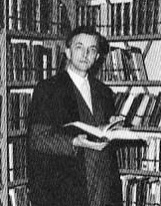
Alexander Barkley and his wife Elsie came to Australia in 1947 to serve the Reformed Presbyterian Church in Geelong as its minister. He developed a close working relationship with the Dutch migrants coming to this part of the country in the early 50’s and shared their vision of establishing a college for the training of ministers in Australia. He was the first lecturer appointed to the fledgling Reformed Theological College and was given the task of teaching Hebrew, Old Testament Exegesis, Church History and Pastoral Theology, as well as Apologetics which was to be shared with a second lecturer. From 1957 he was appointed Principle and remained in that position until his retirement in 1978. But Church History was his greatest love. For three years I sat in his lectures, spellbound, as he made history come alive. Who better to write an article extolling the value of Church History?

The Value of Church History

Before delving into the past to examine afresh some of the great events in the history of the Christian Church, it might be profitable to preface such a study with a consideration of the question, What is the value of such history? Some might be inclined to form a hasty conclusion that it has practically no value. They argue that we are living in the present and have to face the future, so why be concerned about the past?  They are quite content to let “the dead past bury its dead” and live in ignorance of those happenings that have left such a mark upon generations of human beings. Needless to say we do not agree with any such view of history.

Others may not be so contemptuous of the record of past events, but they are content to abide in ignorance of them. They might know a few important dates, but otherwise they are void of any detailed knowledge. That unfortunately applies to the majority of professing Christians. They are not prepared to read the history of the Christian Church, nor become acquainted with the gigantic struggle for the preservation of the truth. They regard it as a rather dry morsel to be digested by a few who have a special delight in being old fashioned. For them life in this modern age is so much different, that the study of the past is regarded as a wast of time.

Before attempting to assess the value of a study of history, it is essential to define what we mean by history. If we regard it as the mere record of events, whether national, international or ecclesiastical it can be very uninteresting and dull.  Such is not the view of history that should prevail in Reformed circles. The true Christian must regard history as the record of the unfolding of the plan that God, in His wisdom, has formulated for the world. In the Scriptures we can see how God raised up the ancient empires and cast them down according to His will in the fulfilment of His purpose. What is true in that age is no less true today. When we see in history the working out of the plan of our Sovereign and Covenant God, then history becomes a study that moves the soul. As  Calvinists “We believe that the same good God, after He had created all things, did not forsake them nor give them up to fortune or chance, but that He rules and governs them according to His holy will, so that nothing happens in this world without His appointment.” (Belgic Confession, Art. xiii.). Dr. W. Hendriksen, in his excellent commentary on the book of Revelation shows how the true philosophy of history is theocentric. “The real mind,” he writes, “the real will which – while fully maintaining the responsibility of the individual instruments – controls this universe is the mind, the will of the Almighty God. Nothing is excluded from His dominion.” This is the view of history that we invite readers to accept.

To the person who believes in the Sovereignty of God, history is of inestimable value. For one thing it provides for him a more complete vision of the Majesty of God. The story of the rise and fall of empires reveals that human rulers, with all their pageantry and power cannot determine the destiny of nations. Secular historians may assign certain reasons for things that happen, but over all such there is the power of God. Some of these writers speak about “fate” or “chance” when something inexplicable happens, but to the Lord’s people it is another evidence of the wondrous works of God. They can sing with the Psalmist “The works of the Lord are great, sought out of all them that have pleasure therein.” It is therefore a healthy exercise for the soul to contemplate God in this fashion, rather than look upon events from a mere humanist viewpoint.

In contrast to this impression the record of events presses upon the reader the fact of sin and the depravity of the human heart. Dr. James Daane, writing in the Calvin forum, asserts that any true philosophy of history must begin with the Fall of man. How any person could read about the deeds that have been committed and then talk about all men being children of God and capable of saving themselves is an insoluble problem. It is remarkable that some of the most infamous of human deeds have found a prominent place in history while some of the more noble activities have scarcely been mentioned. We may glory in our victories in war and struggle with the problems that inevitably follow, but the real cause is to be found in the depravity of the human heart. The need for the message of the Gospel is all the more urgent in the light of history.

The value of Church history is also enhanced by the recognition of the fact, that God is ordering events in the interest of the Church. That principle is clearly demonstrated in scripture. In the midst of the conflicts between great empires we see the care God exercises over the little remnant of His chosen Israel. Our Lord pointed out that “for the elect’s sake’ certain days would be shortened, indicating the restraining power of God in events later recorded in history. Those who study Dr. Hendriksen’s book “More Than Conquerors” will derive no small measure of comfort from the fact that, in the book of Revelation we can see how God controls affairs in the interest of His Church. From the human level the Church is despised in the world, but not so in God’s sight. Whatever may happen in the conflicts between the nations, the Lord’s people can rest assured that final victory will not reside in the forces of evil.

Someone has said that a knowledge of the past is necessary to understand the present. The history of the Church throws a welcome light upon the problems that confront us today. Error has not changed with the passing of the centuries. The name may change but the nature of the heresy is very similar to its historical counterpart. God has been pleased to raise up leaders in the midst of His people to contend earnestly for the faith revealed in the Word of God. In the early centuries there was the conflict between Calvinism and Arminian teaching (which) led to the important Synod of Dort in 1618, which has given to the Reformed Churches the valuable articles known as the Canons of Dort. The doctrines of both Arius and Arminius are widespread in Protestant circles at the present time. The experience of the Church in the past should be a warning to us in these days when so many plead for tolerance. Our forefathers did not tolerate false teaching in their midst and their actions should be a challenge to us. Many of the ancient heresies nestle in the bosom of Modernism that has wormed its way into so many churches. Instead of the doctrines set forth in the historic confessions there is a substitute in the form of a social gospel, with its emphasis on human effort. There is still the old enemy of Romanism endeavouring to secure control and claiming to be the one true church. Multitudes are also marching under the banner of atheistic communism with its emphasis on the material. Our forefathers used the Sword of the Spirit, which is the Word of God, as the chief weapon, and like them we must learn to use the same.

The knowledge of God’s faithfulness in the past should be a constant source of encouragement to every loyal servant of Christ. We are in splendid company, and as we read about the heroic deeds of those who were prepared to face death, rather than prove disloyal to the Lord, the words of Hebrews 12:1 assume a new significance. “Wherefore seeing we also are compassed about with so great a cloud of witnesses, let us lay aside every weight, and the sin which doth easily beset us, and let us run with patience the race that is set before us, looking unto Jesus the author and finisher of our faith.”

Postscript

Prof. Barkley beautifully sums up one of the main reasons we started T&S Revisited. History in general is seldom taught in schools anymore leaving the vast majority ignorant of the past. As a result, what we often see now is a rewriting of history by activists and others to support a particular narrative that they are pushing. As Prof. Barkley points out, Christian Churches are not immune from this phenomenon and our best defence is to be well informed, particularly on the contents of scripture.

If you are of like mind, please “like” the article, forward the link to all and sundry and if you haven’t already done so, please subscribe to “tsrevisited.com” to receive all future articles which are sent weekly. Pieter and I would also be pleased to receive any comments or discussion points you care to raise about this or any other article previously posted.

Are We Still Bound To The Ten Commandments?

Rev. Dr. Klass Runia Th. D., Trowel and Sword, November 1958 – Jan/Feb 1959 

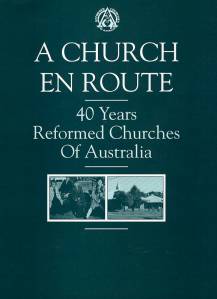
Preamble: Dr. Runia arrived in Australia in 1956 to take up the position of Systematic Theology at RTC. According to “A Church En Route” he is remembered for outstanding scholarship, which shines through in the article below despite the fact English was not his native language. Even so, he deals comprehensively with the question of how we should view the Ten Commandments, and the insights put forward in this article are just as relevant today as they were sixty-five years ago. In his own words, “This paragraph has become longer than I wanted and expected. But the problem is too important and too intricate to be dealt with in a few sentences.” We trust that you will agree.

The Question

A few weeks ago I received a letter from one of our readers asking me to write in “Trowel and Sword” about this question. The reason was that he had had a talk with some friends belonging to another Church. According to these friends we as Christians of the New Testament dispensation have nothing to do with the law. We belong to Christ and are bound to Him only. We do not live under the law, but under grace. The law has been our tutor (tuchtmeester) unto Christ, that we might be justified by faith. But now that faith is come, we are no longer under a tutor (Galatians 3:25,25). They also appealed to Romans 7:1-6. Our reader had pointed out that we have to read the law as redeemed children of God and that the law will guide us as such, but the friends had said: We have received the Holy Spirit and He will guide us into all the truth. If we live close to the Lord Jesus and have communion with Him by reading the Bible and by prayer, we automatically will not kill, steal, etc., but we will seek to love God and our neighbour.

It cannot be denied, that we face an important question here. In our Reformed confessions the significance of the law for our days is fully recognised. It plays an important part especially in the Heidelberg Catechism. Both in the Lord’s Day’s 2 and 34ff. the Catechism deals with the law, the one time as a mirror to detect our sinfulness, the other time to be the guide of our Christian life. Is our Catechism wrong in doing this?  Has the O.T. law had its day? Are we as Reformed Christians trapped in a legalistic system, that is contrary to the spirit of the N.T.? Is there a lack of trust in the Holy Spirit with us?

Especially in the English speaking world many a Christian shares the views of the friends of our reader. And it is a good thing for us that our old, trusted positions are challenged! Too many things have been accepted, in a traditional way, without being our conscious possession. We are not allowed to say beforehand: the others are wrong. The only thing we can and must do is: to turn to the Bible again and to listen to the message of God in the Bible. What does the Bible say here?

The Attitude of the Lord Jesus

The key text for understanding the attitude of the Lord Jesus towards the O.T.  law is undoubtedly Matthew 5:17. “Think not that I came to destroy the law or the prophets: I came not to destroy but to fulfil.” Actually this is a twofold statement. First Jesus says it negatively: “not to destroy”. So His attitude to the law and the prophets, that is: the Old Testament, is not at all disapproving. He is not a destroyer. No. He is a builder. I came to fulfil. That is the positive part of the statement. The great question now is: what does Jesus mean by: “to fulfil”? Does He mean that He Himself will fulfil, will keep the law, so that we are free from the law? No doubt it means that He came to keep the law. And that He did this for us. But I do not think that we are allowed to say, that this keeping of the law by the Lord Jesus means that now we have nothing to do with the law.

We have only to look at the context: In all the following verses of this long chapter Jesus does nothing else than telling us what the law actually means. By many examples He shows that the law of God covers man’s whole life. Not only his deeds and words, but also his thoughts. This is therefore the first meaning of “to fulfil”, that Jesus comes to tell us the deepest meaning of the divine law. It is true, in His explanation of the law we hear many critical sounds, but… this does not mean any criticism of the law itself, but only against the devaluation of the law in the rabbinical system.

He Himself fully acknowledges the law as divine and as binding. He gives us extensive exegesis and says: this is what you should do. In one word: He fully maintains the claim of the divine law.

When therefore a Pharisaic lawyer comes to Him and asks Him: “Master which is the greatest commandment in the law”, Jesus does not give a brand new commandment but He turns to the Mosaic law and takes from it two statements, pronouncing them as THE contents of the law: “Thou shalt love the Lord thy God with all thy heart, and with all thy soul, and with all thy mind”, and: “Thou shalt love thy neighbour as thyself” (Matt. 22:34ff). The former of these commandments is taken from Deut. 6:5, the latter from Lev. 19:18. We can also point to other texts: Matt. 23:23, where He charges the Pharisees with “having left undone the weightier matters of the law” Matt. 5:20.

However, does this mean that Jesus accepts everything without more? Are all the aspects of the O.T. law accepted as equally binding? And then our answer must be: No, there is already a shift noticeable. The reason of this shift is: Jesus own coming. Read Matt. 6:16-18 (about fasting) and 9:14-17 (also about fasting, followed by the profound saying that new wine should not be put into old wine-skins). Through Jesus’ coming a completely new situation has come into existence.

He is the Messiah and in his coming the Messianic Kingdom has come in principle. Therefore all that was ceremonial in the O.T. law, all that pointed to Him, has to be discarded. How can the sons of the bride chamber mourn, as long as the bridegroom is with them? Matt. 9:15. How can a piece of undressed cloth be put on a new garment? How can new wine be put into old wineskins? (verses 16,17). 

But all this is not a revolutionary putting aside of the divine law! The law is only placed into a new relation to the new Messianic situation. In this relation some of the aspects of the law get a different meaning, are even abrogated, but there is no indication whatsoever, that the law as such, THE LAW AS THE DIVINE RULE OF LIFE, is put aside. On the contrary: He himself dies on the cross to fulfil the law and to bear its curse. In this way He makes true His own words, spoken to John the Baptist: “It becometh us to fulfil all righteousness” (Matt. 3:15). “All righteousness”, that means all that is demanded by God. He himself fulfils it. And He is doing it for all those who believe in Him, that they too may enter into the kingdom of God, that they all may become His children, who wholeheartedly want to live according to His demands.

(Continued in Jan/Feb 1959)

The Attitude of Paul

All the afore-mentioned statements of Jesus were spoken by Him before His death on the Cross. Somebody might say: All these words hold true only for the period before His death on the cross. His death was THE great turning point. Through His death everything has been changed, so that we now have nothing to do with the law.

Is that so? We cannot do better than turn to the apostle Paul, who more than all the other apostles has occupied himself with the problem of the law. In the first place he knew the struggle with the law out of his own experiences. Had he not been a Pharisee himself? Better than anybody he knew the danger that was threatening the Jew in this regard, namely to use the law as a means of self-made salvation. On this aspect he is writing in his epistle to the Romans.

Further there was the constant struggle with the Judaists (sic) who tried to destroy his preaching of the gospel of grace, by imposing the whole Old Testamentic (sic) law, especially the demand of circumcision, on the newly converted Gentiles. Against these Judaists (sic) he writes in his epistle to the Galatians.

What is his attitude?

It is not an easy thing to say that in a few words. Every simplification does injustice to his profound and comprehensive views. Though the problem of the law indeed is THE great problem of his life, yet he is not a single-rack man and never becomes one sided. There are several lines in his thoughts on the law.

1. He utterly rejects every possibility for man to obtain salvation through the law, Rom. 2:20 “By the works of the law shall no flesh be justified in His (God’s) sight”. There is but one way of salvation: the righteousness through faith in Jesus Christ, which now has been manifested apart from the law, though it was witnessed already by the law and the prophets (verses 21,22). His conclusion is very clear and leaves no room for any misunderstanding: “We reckon therefore that a man is justified by faith apart from the works of the law” (28). Also Abraham, the great ancestor of all the Jews, did not receive the promise through the law, but through the righteousness of faith (4:13). Cf. also Gal’ 3:11. So the whole system, set up by the Jews to use the law as a ladder to heaven, is fully discarded.

2. Is then the law of no importance at all? On the contrary. It indeed is the way of life for everybody who will fulfil it (Gal. 3:12). Yes we all actually should do it. But we cannot do it. So we all are liable to eternal punishment, having deserved the curse of the law. But Christ has come to fulfil the law in our place and to redeem us from the curse, having become a curse for us (Gal 3:13). Therefore the law is not any longer our master. “But now we have been discharged from the law, having died to that wherein we were held: so that we serve in newness of the spirit, and not in oldness of the letter” (Rom. 7:6).

Here the question comes to us: what does Paul mean by the word law? The answer must be: the THORA, (sic) that is the whole Mosaic law, the whole complex of laws as they have been given at Mount Sinai, with their moral, ceremonial and political aspects. In other words, Paul is not speaking of the Ten Commandments, or of the law of God in a general way, but of the law in its very specific form, as it has been given to Israel after the exodus. (Cf. Gal. 3:17, Rom. 5:20). 

Why did God give this law to His people? Paul himself answers this question, and that in a twofold way. (a) This law was given to Israel to make it aware of its sins. It was given that sin might be recognised as sin (cf. Rom. 7:8-11). (b) The law was a tutor (tuchtmeester, paedagoog) (sic) unto Christ. It was intended to awake the desire for Christ in the people by its innumerable commandments and its minute provisions. In this regard it was really a hard master.

This last function, however, it has lost, when Christ Himself came. As to this Christ indeed is the end of the law (Rom. 10:4). The Greek word used here by Paul has the same double meaning as the English word end, namely last part and goal. As a tutor the law has no say over us any more (Gal. 3:25). We are no longer under the law (Gal. 5:18).

3. On the ground of this we are not surprised that exactly Paul is the great advocate of Christian Liberty. Constantly he says to the Romans and the Galatians: ye are free. Ye are no longer servants, but ye are free children. Read Gal. 4:4,5,31, where he stresses that Christ who was born under the law, redeemed us, which (sic) were under the law, that we might receive the adoption of sons. And then he writes those famous words: “With freedom did Christ set us free; stand fast therefore, and be not entangled again in a yoke of bondage” (cf. Rom. 8:2). Yes, Paul does not permit this freedom to be infringed by anything. Fierce therefore is his opposition to the doctrines of the Judaists, who want all the converted Gentiles to be circumcised. Warningly he says that everyone who has himself circumcised is a debtor to do the whole law (namely of Moses). (5:2ff). “But if ye are led by the Spirit, ye are not under the law (verse 18).

4. Does this letter mean, that Paul in appealing to the Spirit rejects the law in every respect, that he even does not know of the law as a divine rule of life? Is there no good in the law at all? – Whosoever draws this conclusion, has not yet seen the full picture. Such a one is simplifying Paul’s doctrine.

Exactly in Romans 7, where he speaking of the freedom of the law, he is stressing time and again, that the law itself is “holy and righteous, and good” (12). Read also verse 7 and verse 13 (“that which is good”). And in verse 14 he says: “The law is spiritual”. 

Now you may say of course: but we do not deny that the law is good. Was it not given by God Himself? We only assert, that it has no binding power now.

But listen then again to Paul. He has still more to say. Read Rom.8 and Gal.5. They are the chapters in which Paul constantly speaks of the freedom we have won through Christ, and of the guidance we receive from the Spirit. And what do we find there? Exactly there Paul is referring to the law! 

Rom.8:2, “The law of the Spirit of life in Christ made me free from the law of sin and of death”. 8:4, In Christ God condemned sin in the flesh, that the ordinance of the law might be fulfilled in us who walk not after the flesh, but in the Spirit”. 8:7, “The mind of the flesh is not subject to the law of God, followed by the contrasting  verse 9 “but ye are not of the flesh, but in the Spirit”.

Of great importance is particularly Gal. 5:13ff. First in verse 13 Paul reasserts emphatically: “For ye, brethren, were called for freedom”. That is the starting point and Paul does not want to minimise it in any way. But then he goes on and says: “only use not your freedom for an occasion to the flesh, but through love be servants one to another”. Why is that necessary? And then the remarkable answer is: “For the whole law is fulfilled in one word: Thou shalt love thy neighbour as thyself”.

To point out the Christian way of life, Paul too falls back on the Mosaic law! Paul can do this, because he first has freed the law from the legalistic system, which was made of it by the Jews. Paul knows Jesus Christ. He knows: Jesus Christ has fulfilled the whole law. Now all the shadows can disappear. But also: now the law in its original meaning has been restored, namely to be a rule of life, of the new life of thankfulness. And so in the same chapter where he says: “If ye are led by the Spirit, ye are not under the law” (Gal.5:18). He also, after having mentioned the fruit of the Spirit (22), can write: “Against such there is no law”, or better translated: “against such the law is not” (23). And likewise in the following chapter he speaks of the “law of Christ” (6:2).

Read further also Rom. 13:8-10, where Paul several of the Ten Commandments mentions (sic), and that in such a way, that they are seen as still binding. Yes his conclusion is this very positive statement: “Love therefore is the fulfilment of the law”.

Our final conclusion therefore must be: “The New Testament accepts the law in a positive sense, but…. within the framework of Christs’s work! He who has been redeemed by Christ, may now serve his God in newness of heart and according to His divine will, revealed in His law. He may live, as the Isrealites should have lived according to the law. For are not exactly the Ten Commandments prefaced by the divine proclamation of redemption: I am Jehovah thy God who brought thee out of the land of Egypt? 

The rejection of the law by appealing to the Spirit is a very dangerous way. There is the permanent danger that (our) own conceptions are conceived of as revelations of the Spirit. But how do we know what the Spirit is saying to us? Does He speak directly? Or does He speak through the revealed Word? Why does the friend of our reader, who asked the question of this article, know that he should not steal, kill, etc.? Is it not, because the Spirit has spoken to him too through the Old Testament law? The Spirit will guide us into all the truth. Indeed. We never may doubt of this promise. But also: He shall not speak from Himself, but He shall take it of Christ. And where do we find Christ? In that Word, that is a lamp unto the feet and a light unto the path. That is the Word  of both Old and New Testament, of both Law and Gospel.

This paragraph has become longer than I wanted and expected. But the problem is too important and too intricate to be dealt with in a few sentences. I would ask you all to read it with your Bible in your hand. For the Bible itself must have the last word.

K. Runia

Church Membership

Rev. J.A.Scarrow, Trowel and Sword Dec. 1955

Preamble: Reverend J. A. Scarrow resigned from the Presbyterian Church because of a difference with the Auckland Presbytery over the family of a church elder winning an art union lottery prize. It was believed Mr. Scarrow advocated the disciplining of the elder by the Paris Session. The Presbytery, while taking a strong ethical stand on gambling, felt an individual’s actions should be governed by his conscience. A small group of people followed Rev. Scarrow out of the Presbyterian church and they started the Reformed Presbyterian Church of Bucklands Beach, which continued to faithfully meet together to learn from God’s word and serve the people of East Auckland, in New Zealand. Rev Scarrow was a regular contributor to early editions of Trowel & Sword.

Today we have an article which raises fascinating questions with even more fascinating answers or solutions. However, with the distance of 70 years do the answers smack of legalism or are we discomforted by our laxness? Do some of the solutions lack the imagination of a spirit filled vision for the church? The sense of church and kingdom comes through clearly. Does the church have a clear Kingdom vision today? Once again, read,  reflect and please respond. (Pieter)

Church Membership

“If every church member was just like me, what kind of a church would my church be?”

Would it be worldly or spiritual?

Let us look at the requirements of church membership so that we may hold ourselves up to certain principles of doctrine and practice.

On the one hand, the session is responsible for receiving members from the world or from amongst our youth who are asking a welcome to the Lord’s Table. So eager is the church to gain members that she is tempted to be silent when a plain word would,  in the long run,  be most  beneficial to her members who are her very life through God’s Spirit in their hearts.

Should the session ask people pointedly if they intend to  practise consistently church attendance,  or do they think they can come only when it suits their convenience? Strength and weakness show up very clearly just at this point. The stronger manage often at considerable cost, to be present with their families every Sunday, at least once, and in many cases twice. The weaker have good intentions, may be, but the most trifling excuse hinders regular attendance.

Worldly visitors arrive or are expected for dinner; or perhaps one does not feel very well, and it would be an effort to get ready and attend. All should be reminded of God’s Word through Isaiah 58 :13,14 “If thou turn away thy foot from the sabbath, from doing thy pleasure on my holy day; and call the sabbath a delight, the holy of the Lord, honourable; and shalt honour him, not doing thine own ways, nor finding thine own pleasure, nor speaking thine own words: Then shalt thou delight thyself in the Lord; and I will cause thee to ride upon the high places of the earth, and feed thee with the heritage of Jacob thy father: for the mouth of the Lord hath spoken it.”

When so many in this land use the Lord’s Day to do their own work and pleasure, how delightful it is to know families who plan on Saturdays to finish all work that might be a temptation on Sunday. The mowing of lawns can be done before Sunday of left until Monday. So can the cleaning of shoes and many small duties that crowd in on a Sunday morning when there is so much to attend to especially for busy mothers bringing their children of (sic) church. That mad rush at the last minute which spoils the peaceful atmosphere of Divine Worship and the disturbance of coming in late could quite easily be avoided by rising from bed a few minutes earlier and preparing to be ready in good time. How inspired and inspiring the minister would be in the atmosphere of a quietly waiting prayerful congregation ready for God’s Word.

Does the session ever ask the prospective member if he really intends to practise Christian stewardship, or does he intend to rob God? Prov. 3: 9 “Honour the Lord with thy substance and with the first fruits of all thine increase” and Mal. 3 “Bring all the tithes”. “Ye have robbed me in tithes and offerings.” In the New Testament times many gave to God in response to His grace, all they possessed “Neither said any of them that ought of the things which he possessed was his own”. All possessions were held in trust for the Lord. When our Lord says, “Go ye to all the world with the Gospel,” some say “No, I’ll stay at home and send someone else to be my proxy, and I’ll give £.1.-.- a year for his support.” If such a one went himself, he would sell all that he has to go, but when another goes, he is content to live in luxury while he gives a trifle if it doesn’t touch his pocket.  “Bring ye all the tithes.” Stop robbing God. Only then can there be blessing upon the church.

When a man becomes a member of the church, do the session talk plainly with him, telling him that he will  be a strength only if he conscientiously and sacrificially faces the issue between the  interests of the Kingdom of Christ and his own private plans and ambitions, so as to really put first the Kingdom? Is he willing, even at financial loss, to keep himself and family where he can attend and support the church? Should not the session tighten up the loose nuts of church life with a little discipline and speak first to members who are indifferent to many things that hinder the Kingdom?  Until there is discipline in such matters, no expansion or any real fruit will be enjoyed by the church. Chinese mothers have been heard to threaten naughty children by saying that if they don’t obey, they will cut off their ears; but the children know that no child’s ears ever have been cut off, so they continue in their naughtiness unperturbed.

When a man runs off with another man’s wife the session does something about it, but in ordinary and very common cases of flagrantly broken vows and professions, nothing is ever done about it and everyone knows that nothing will ever be done about it.

Rev. J.A. Scarrow


Reformed Preaching In A Scientific Age

Rev. A. Barkley BA. Trowel & Sword, April/May 1955 (Part 1)

Preamble: April 25 (Anzac Day), 1955 saw the official opening of the Reformed Theological College in Melbourne where both newly installed lecturers, Rev. J.A. Schep and Rev. A Barkley gave their inaugural addresses. Prof. Barkley’s subject was, “Reformed Preaching in a Scientific Age,” which was printed in T&S over two editions. Few people at that time could have imagined the speed of advancement or the extent of scientific discoveries in the years that were to follow. However the role of the preacher remains unchanged so Prof. Barkley’s words of wisdom are just as relevant today as they were back then, even though science in the twenty-first century has to some extent become indistinguishable from what we might call pseudoscience. We strongly recommend you read through the whole article. His concluding remarks, including a quote from General Omar N. Bradley of the United States Army, contain some powerful messages which we would do well to heed.

Reformed Preaching In A Scientific Age

It has been claimed by men of science that we have entered upon a new era in the history of the human race – the Atomic Age, they call it. The discovery of the atomic bomb has in some measure thrown the word in confusion and fear seems to overshadow the nations. A new world of power has been exposed to exploitation by the genius of man. The study of science has captivated the imagination of students throughout the civilised world and terminology, once confined to the precincts of the laboratory, is now on the lips of the children. In the press we are daily confronted with the expressions “atomic energy”, “nuclear physics” and “radio activity” etc.

The greatest and most important single factor in the creation of the civilisation of the present hour has been the development and application of what is commonly called “the scientific method”. This method consists of four steps in the process of establishing a theory. 1. There is observation to discover the facts. 2. Generalisation, ie. an effort to combine in one statement characteristics common to the objects under observation. 3. Formulating an hypothesis, which is an attempt to find a principle underlying them all. 4. Testing this hypothesis by seeing how it works in some unexplored direction. As a scientist writing in “The Christian Graduate” states, “Not only does modern science start with facts; it repeatedly turns to them to test its hypothesis. It reasons upwards from its primary facts inductively, and then downwards to a set of consequences deductively”.

That some wonderful results have been achieved by this method, no one would dare to contradict. In the realm of medicine alone we have an abundance of evidence of the benefits brought to sufferers through the discoveries of the past twenty years. Dread diseases can no longer claim their victims unchallenged, and research work still goes on in the war against bacteria. The effect of the results of this scientific method upon the minds of men and women has been both subtle and extensive. A.S. Nash in his book “The University and the Modern World” draws attention to the exalted place held by science when he writes “In the whole domain of knowledge the predominant mode of thinking has been so deliberately modelled on the natural sciences that it is not an exaggeration to say that the scientist in the modern world receives a veneration, which for human credulity can only be compared with the superstitious regard which the medieval peasant paid to his priest”.

In the realm of education the god of science holds the place of pre-eminence, and the influence of the scientific method extends throughout the plans for training the rising generation. Some thoughtful people are becoming concerned as they see the possibilities. When they read about the devastating powers of a hydrogen bomb and listen to the words of warning from the lips of prominent scientists, they begin to wonder if science has not produced a monster that threatens to destroy us. Even Albert Einstein trembled as he thought of the possibilities of the destructive power of atomic energy and he was forced to the conclusion that science was no guide. He writes, “Objective knowledge provides us with powerful instruments for the achievement of certain ends, but the ultimate goal itself and the longing to reach it must come from another source”.

The question which we must now consider is, Has the Reformed preacher a message for such an age as this? Can he take his place as one of the marching army prepared to accept the challenge of the so called scientific method, or is he to take his place in a funeral procession in the midst of which there is a coffin with the remains of Calvin and loud cries of mourning, lamentation and woe? I am persuaded that he should be in the forefront of the battle for he has a message for this age that is vital. A message that no other preacher has got, however popular and cultured he may be.

Reformed Preaching In A Scientific Age

Rev. A. Barkley BA. Trowel & Sword, June/July 1955 (Part 2)

The Reformed preacher must declare in face of all the claims made by modern science that there is the Revelation of a Sovereign God, particularly in His Word. If the scientist says, “How do you know there is a God,” wen can answer by asking, “How do you know there is not?” There is no time to waste on an idle discussion about the existence of God. The Reformed Teacher must have his convictions and like the prophets of old be prepared to speak with the authority of, “Thus saith the Lord.” His authority, therefore, cannot be found in human powers or in the advance of science. In an article which appeared in the Free University Quarterly some years ago, Prof. Waterink ably defends the necessity for true scholarship to begin with Divine Revelation. He states, “The Christian life-view faces the questions of life in a different way. It sees the problems, recognises them, has a deep respect for them. It has respect for any and all efforts which are made to solve these problems. But it has itself received, not found, not won by conquest, but “obtained” as grace the solution of many of the questions by reason of the fact that it sees the truth not only as a problem in time, but also as the revelation from Eternity. It sees Eternity behind time and out of this Eternity God has spoken and allows His light to shine, even over the mysteries and riddles of life.”

In the name of scholarship the Bible has been attacked and much attention has been diverted to the defence of the Authority and inspiration of Scripture against these attacks. The Reformed preacher must not concede anything to the critics otherwise he will lose the power of the Spirit. There is no need to fear the consequences as far as any attack upon the Word of God is concerned. The Bible has withstood the efforts of man to destroy it for centuries and yet today it is printed in more languages than ever.

The Reformers took their stand on the authority of the Scriptures and that is why attention is drawn to the inspiration of the Scriptures at the beginning of the confessional statements. The great preachers in Reformed circles confronted their hearers with the fact of God and His revelation. Calvin was the Biblical theologian of his age. To quote Dr. Loraine Boettner, “Where the Bible led there he went; where it failed him, there he stopped short. This refusal to go beyond what is written, coupled with a ready acceptance of what the Bible did teach, gave an air of finality and positiveness to his declarations which made them offensive to his critics”. It is not always possible for the preacher to be an authority on one branch of science nor is it necessary, but he should speak with far greater authority because he takes his stand upon what Gladstone described as “the impregnable rock of Holy Scripture”. To strike such a note of certainty in an age of fear and distress is the prerogative of every ordained minister who is espoused to the Reformed faith.

The Reformed preacher has an important task in this age of science because he has a creed. The scientist presents his conclusions as they have been derived from his research. There are certain things he has come to accept and he is guided in his thinking by what have come to be regarded as facts. His work is systematic otherwise he has no hope of arriving at worthwhile results. Those responsible for the drawing up of the Reformed confessions were scientists of the first order. They were theologians and theology is the science of the Sciences. Calvin wrote his institutes not merely for the sake of producing a theological treatise, but rather to provide a means whereby the truth God had revealed might be presented in systematic fashion. The confessions such as the Belgic Confession and the Westminster Confession of Faith present a systematic summary of the main doctrines of the Scriptures. The preacher who knows his confession has a guide that will enable him to present the teaching of the Bible in logical fashion.

The plea that there should be no creed but the Bible has been in some measure responsible for the increasing number of sects that have arisen in the past fifty years. It is a dangerous assertion, for while we in Reformed circles acknowledge the infallible authority of Scripture, we want to know what is taught in the Bible. When we quote from the Catechism or Confession we are presenting what we accept as a true statement of Scriptural teaching. What valid objection can be raised against a clear presentation of the vital doctrines of the Christian faith as taught in the Word of God? How can we persuade men, if there is confusion in the effort to set forth what God has revealed in His Word? No one would dare substitute a confessional statement for the Bible, but it serves a useful purpose in enabling members of the church to speak with one voice as to the teaching of the Bible.

Someone might raise a further objection and say that instead of preaching a creed we should preach Christ. The claim is made by some modern evangelists that they preach Christ and not a creed. But what does it mean to “preach Christ?” To find an answer it is helpful to turn to the preaching in the days of the apostles. They did not preach a theory of their own, neither did they concentrate on an argument with paganism. They did not indulge in the utterance of pleasing platitudes on brotherhood. The keynote of their preaching was, “that which we have seen and heard declare we unto you.” Centuries later Luther made a similar declaration when he said, “To preach always Him, the true God and man. This may seem a limited and monotonous subject, likely to be soon exhausted, but we are never at the end of it.”

The Apostles spoke about the Divine plan of Redemption formulated in Eternity. They declared that there was a purpose in the coming of Christ into the world; they had a great deal to say about sin and the atonement for sin; they laid stress upon the fact that Christ died for others and rose again from the dead. In Apostolic days they preached predestination, election, total depravity, regeneration, repentance, justification, adoption, sanctification, judgement, heaven and hell. All this was involved in preaching Christ. All these doctrines are set forth in the Reformed confessions. To preach Christ you must preach a creed otherwise you cannot expect intelligent belief. When Jesus spoke to Martha before the resurrection of Lazarus, He said, “I am the resurrection and the life. He that believeth in Me though he were dead, yet shall he live, and whosoever liveth and believeth in me shall never die.” Then follows the question, “Believeth thou this?” Christ revealed himself to Martha and there was demanded of her acceptance of what constituted a creed.

It is remarkable that so many Arminian and Modernist preachers denounce the necessity of a creed in days such as these. The Marxist disciple has got his creed. He turns to the writings of Marx and Lenin and quotes the statements of his masters and is prepared to sacrifice on their behalf. Each false religious system has got its creed and the devotees have been prepared to defend it with the sword. Yet so-called evangelists and teachers say “no creed” and even despise those who dare to adhere to such.

If there is no creed one must ask, is there theology? Any such theology must in large measure be a theology of experience. In his introduction to Dr. Warfield’s monumental work entitled, “The Inspiration and Authority of the Bible” Dr. Cornelius van Til states, “It is only the followers of Calvin who have a theology that fully fits in with the idea of Scripture. Only a God who controls whatsoever comes to pass can offer to man His interpretation of the course of history in the form of an existential system. An evangelical, that is a virtually Arminian theology makes concessions to the principle that controls a “theology of experience”….. Such evangelicals have done and are doing excellent detail work in the defence of Scripture but they lack the theology that can give coherence to their effort.” Preaching that merely plays on the emotions is not sufficient for this age or any other.

General Omar N. Bradley of the United States Army uttered these solemn words a few years ago: “With the monstrous weapons man already has, humanity is in danger of being trapped in this world by its moral adolescents. Our knowledge of science has clearly outstripped our capacity to control it. We have too many men of science, too few men of God. Wo have grasped the mystery of the atom, and rejected the sermon on the mount. Man is stumbling blindly through a spiritual darkness while toying with the precarious secrets of life and death. Our world has achieved brilliance without wisdom, power without conscience. Ours is a world of nuclear giants and ethical infants. We know more about war than we do about peace, more about killing that we do about living. This is our twentieth century’s claim to distinction and to progress.”

Never was there an age that presented such a challenge to those of Reformed persuasion. To every branch of the Reformed churches in the world surely comes the call, “Proclaim the glorious truth that there is a sovereign God who has revealed Himself. Carry out the command of Christ when He said, “Go ye therefore and teach all nations, baptising them in the name of the Father, and of the Son, and of the Holy Ghost; teaching them to observe all things whatsoever I have commanded you.” Teach the doctrines of the Word of God, teach the Law of God. It will not make you popular, for many do not want to trouble about doctrines and the Law of God is despised. But surely the true and earnest preacher is not out to seek popularity. He must labour as one who will be answerable to God. Blessed is the one, who at the end of the journey can say with Paul, “I have fought a good fight, I have finished my course. I have kept the faith; henceforth there is laid up for me a crown of righteousness, which the Lord, the righteous judge, shall give me at that day.”

Rev. Alexander Barkley

The Last Word

Rev Geoff van Schie. Trowel and Sword editor. December 2010

Preamble: It can be no easy thing as the editor of a magazine that has been the lifeblood of the Christian Reformed Churches of Australia and New Zealand for the past 56 years, to write its obituary. This task fell to Geoff van Schie and the words that poured out of him were filled with the emotions of the occasion. No doubt a large factor in the decision to cease production was economic, at a time when all and sundry were predicting the demise of magazines and newspapers with the coming of the digital age. Ironically, the demand for magazines in general is as strong now as it has ever been. Towards the end of his article Geoff asks the question whether we have gone in the wrong direction in stopping production. It took only three years from the beginning of the Reformed Churches in Australia to the beginning of T&S. With Geoff we pray that after thirteen years a new editor and team may be found to lead T&S to a new chapter in its history under the grace of God. It may require a leap of faith, but surely that is the business that we are in! (Bert & Pieter)

Editor’s Notes – (The Last Word)

How does one start? That has been a question facing me for a while. This is especially so when these notes will not only be my last as editor of T&S but also the last after 56 years of the printed version of the magazine itself. What does one say in such a piece in such a time?

As I look back over almost nine years of being editor if T&S, I realise that the Lord has grown me in the process and in this way T&S has been a blessing to me despite the drain on time and energy it has represented as to its relentless call for attention. As I mentioned in an email to a colleague this morning, I see that the Lord has used T&S in particular to develop within me the fruits of the Spirit.

How so you may ask? As other editors of denominational magazines would know, to be the director of such a publication means that much pressure is placed upon you to print only what one particular segment of the denomination believes to be ‘right’ for the ‘flagship’ of the CRCA. I give thanks to the Lord that in managing such pressure from all sides of the CRCA, and even from some outside the denomination, He has driven me to consciously endeavour to maintain those fruits; “… love, joy, peace, patience, kindness, goodness, faithfulness, gentleness and self-control”. (Galatians 5:22-23).

It is my belief being the editor has taught me to be more patient and gentle with others than ever before. It certainly has powerfully developed within me the fruit of self control! Many rewrites of Ed’s notes and even total discarding of some and beginning all over again, are testimony to that particular fruit. Editors are human and if we are not careful we can sinfully return in harsher measure what we have received, in the process abusing our position as editor. Yet our task is as servants of Christ to be like Him in such a significant role.

My role over the past years has also taught me what striving for peace is all about. Over the time I have been editor there have been quite a number of controversial issues at work within the CRCA, some threatening to rip the church apart, with some ministers and church councils speaking of entertaining the thought of leaving the CRCA. At this very time, this is again the case. Over the years I have sought to objectively allow the differing sides to share their concerns, always applying the policy that what was said had to address the issue and not the ‘man’. There have been times when I have not allowed items to be published because of what I perceived to be their inflammatory and unedifying tone or potential to be divisive.

In spite of the challenges that by grace God uses to grow an editor, I cannot but acknowledge the joy and love that I have experienced in the task. It has been an honour and privilege to work with a wonderful team of very positive and committed people without T&S would not be what it is today. The current team members have written their own personal farewell (see pages 34-35). Those who have served with me over the years worked hard seeking the best for the CRCA and T&S. It has been a blessing to personally have had such a committed group around me – truly a gift of God. I thank them for their service in love for their Lord and the CRCA.

With love and joy this team has endeavoured to bring to the CRCA the best magazine we could produce, visually and as to its content. The team has endeavoured to fulfil the original vision of the founders of T&S, that T&S should be a ‘popular’ magazine with something in it for all the family. Indeed we have worked hard to steer away from T&S being again perceived as a publication written by ministers for ministers. We pray that we have achieved this if even in some small measure; we seek our reader’s (sic) forgiveness where we have failed.

In an email just received from one of the staff of Matthias Media (publishers of ‘The Briefing’), we are encouraged that some believe our efforts have hit the mark. That email in part reads as follows:

I just wanted to say that I am sorry to hear this (discontinuation of printed version of T&S), although I suppose I understand better than most the economic realities print publications are facing. T&S has been one of the publications that sits on our lunchroom table, and is often browsed and read by Matthias Media staff. Its look and feel has certainly become first rate, and the content was always biblical and edifying.

Warm regards Ian Carmichael, Matthias Media.”

As I sign off I must confess that I am afraid that we will discover we have moved in the wrong direction in ceasing a printed version of T&S – a matter of not knowing what we have till it is gone. The prayer of the outgoing team is that T&S will live on and remain a blessing to the CRCA and its wider readership. We pray the synodical interim committee will soon find a new editor and team to lead T&S to a new chapter in its history under the grace of God.

Thank you to all those who have T&S alive through their subscriptions, especially those few churches that bulk ordered for every family and single unit. Those churches were indeed the backbone of T&S’ (sic) financial sustainability. May the Lord bless and keep you all as we again take time to be in wonder of God’s grace as this Christmas we remember the arrival of Immanuel – God with us!

T&S also would never be what it is without the many volunteers who over the years have done an outstanding service to the CRCA in the provision of a wide variety of items. These volunteers have come from every state, and some also from New Zealand. Lately we also have had many items sent and published from those submitting items from outside the CRCA in Australia and also overseas, all given as a gift for no payment. Those contributing to the content have come from a wide variety of walks of life using their God given gifts to seek to be a blessing to our readers. From the WA team we extend our heartfelt thanks to them all.

Rev Geoff van Schie. Trowel and Sword editor. December 2010

Building a New Nation

Preamble: Welcome readers to our first offering from the wonderful trove of Trowel and Sword articles. This week we present the very first Editorial from the first issue back in October 1954. It is worth reading for a number of reasons. There is a reminder of the sense of calling that many early Dutch immigrants had when they arrived in the new lands. It was a sense of calling and urgency that would be well for us to heed some seventy years later in lands that our forebears would hardly recognise. It was a sense of calling to our region which was both farsighted and refreshing. The thought that struck us most clearly is that we are  called to be God’s people wherever we are, and not representatives of a western way of life or thinking. It is a calling to be counter cultural.

Please feel free to reflect and comment in the discussion part of the of the website. Our prayer is that we will be challenged and encouraged by the voices of the past, and our discussions together.

“Building a New Nation” by Rev. John VanderBom.

A very vast project is always present in the mind of every true believer. It is the kingdom of God, that is to come. According to our Heidelberg Catechism, that kingdom which we pray for will come to perfection on the Day of Glory.  But today, and among us, that same Kingdom has to be realised, and manifest by the submission of the believers to their Lord. Therefore we pray: so rule us by Thy Word and Spirit, that we may submit ourselves more and more to Thee… In that way a new nation is built.

In the submission and obedience of Christians in olden times, local churches were visible as parts of christ’s new creation. Their Lord Who bought them with His own blood was glorified by them. His work became visible in them. But in that same vast project, we, too are also engaged. We ministers of the Word of God, and all true believers, are very closely concerned in it. It is our responsibility that the church again in our days, may be preserved and increased. We, in our small local churches all pray for, and work in, this vast project, that Jesus Christ Himself may be visible as Head in His new creation.

With these thoughts in mind, I presume to write an article for the first copy of “Trowel and Sword,” our Reformed Monthly. In great thankfulness, but with much hesitation is our beginning, a beginning in the Name of Lord. He who also created this part of the world that His praise should be heard, and His sovereignty recognised.

There is something startling and oppressive in the thought of how this so long forgotten part of God’s world is now developing, with rapid strides, to be a stronghold of Western character and culture in the Southern hemisphere, as close as it is to the Asiatic nations breaking adrift.

Immigration was one of the measures devised to strengthen Western influence. The slogan heard so often and in so many countries after the last war (WW2) was given a special accent here: a new nation has to be built!!

Indeed, that is what we need. And less than that will not suffice. We want new nations, communities of new men. We want a new generation of men of God, thoroughly furnished unto all good works. But how is that ideal to be realised? Only by adopting a very high standard.

The solution of a new nation does not lie in the assimilation of the Australian way of life, but in accepting the very high standards of God’s Holy Word for every sphere of life. Renewal of the world and of nations, can only issue from renewed attention to the King of kings and the Lord of lords. But therefore more than ever, a real, and attentive church is required. A church that maintains the golden standards in the midst of national life. “To the law and to the testimony: if they speak not according to this Word!”

We are told, very often, that the Church is at one of its lowest ebbs. Despite many Christian individuals living an exemplary life; despite the great self denial of active missionaries in far countries; despite impressive international congresses wrestling and praying for more visible unity of churches, the real unity of that body and its head is questioned, by innumerable young people in the so called Christian countries today. How many are longing for a Church that reveals herself to be a real mother, a true bride of her Lord.

In these days we feel that church has to put first things first. Woe is unto us, if we preach not the gospel; and if we preach it not pure. That is the strenuous task laid upon our weak shoulders. Not without great cause did we choose as our title for this Monthly: “Trowel and Sword.” Just as in Nehemiah’s days we are convinced that a new nation must be built in Jerusalem. And like him, we know that God’s city must be secured by walls (while we won’t forget the gates!!) Like him, too, we fear less, danger from fighting, than from compromise with the double-hearted. We are convinced that the church can only be a blessing to this world, if she herself is aware of her high responsibility in preaching the pure Word of God, and maintaining the Divine authority of that Word.

It is our fervent desire, that the Lord may use this monthly to bring together all those in the Australasian world who are concerned in the building up of a new nation upon the foundation we have indicated. “Reformed” in the 20th century, still means the same as in the 16th century; back to the Bible, back to God. It has always been one of the marks of  genuine Calvinism, that godliness was believed to have the promise of the life that now is, and of that which is to come. We are thankful that many believe it still today, and we feel hopeful that in many parts of the new world as of the old, a revival of the Reformed faith is visible.

The idea of coming before the public with a monthly like this did not rise in our minds in the first place. In the early days of the post-war migration the Rev. Arthur Allen (who himself is a correspondent of the “Calvin Forum”) suggested the publication of a paper for contacting all those Reformed people of Dutch origin who received hospitality in the Free Church. So “Fidelity” started, but soon had to lose its battle theough shortage of paper in Sydney!  Since then many Reformed congregations are publishing their own letters or circulars. The “Australian Free Presbyterian” has for long existed as a denominational paper. The monthly that is now on your table, was initiated in New Zealand and intends to be a mouthpiece for all of the Reformed persuasion in our countries. 

Let me add a personal note. I always feel highly indebted to the several Reformed brethren who fought here their strenuous, lonely battle for years before we came. The fact of their being here was an incentive to me to join the army of migrants coming to this far land.

The character of this monthly will be to give something for everybody. It was again the Rev. A. Allen who pioneered a Reformed theological journal, but it, alas, has, in other hands, since lost its Reformed character. But for today we do not intend a theological magazine but a popular paper for the Reformed family, talking in a kind-hearted tone about things in every sphere of life, home, science, labour unions and housework, church and schools and missions, politics and television and, indeed, everything without exception, which comes under the aspect of our Christian responsibility and the authority of God’s Word. 

We do hope and pray that “Trowel and Sword” in just this practical way, may serve as a savouring salt in society. 

For the benefit of the many Dutch readers, some part will, for a time, be written in Dutch, and other articles be summarised in Dutch. 

Lastly, do not forget, readers, we are all builders, and the wall is rising, and underneath it is the true foundation. We too, even as we build, must take to ourselves the whole armour of God – the sword of the Spirit, which is the Word of God, must be ours in every day of toil.

J. VANDERBOM

A Short History

The first edition of Trowel and Sword was published by and for the Reformed Churches of Australia and New Zealand in October 1954, with the final printed edition being distributed in December 2010.

The denomination itself had only been established three years earlier and consisted mainly of Dutch immigrants who had been part of the post-war exodus from Europe looking for a new life and a new beginning. They came with a pioneering spirit, full of hope and fervour, beginning their new lives in a strange environment and often in what would today be considered substandard housing.

Their lives revolved around work and their churches; often tiny congregations spread across the length and breadth of Australia and New Zealand.

What they achieved in those early years was truly remarkable and included permanent places of worship, Sunday schools, Youth Groups including Cadets and Calvinettes, Holiday Clubs, Beach Missions and other outreach activities which often led to the planting of new churches, the establishment of the Reformed Theological College for the training of ministers as well as being instrumental in the starting of many Christian schools.

They dreamed dreams, worked hard and prayed ceaselessly, and God blessed their efforts.

A detailed account of the development of the Reformed Churches is contained in “A CHURCH EN ROUTE” – 40 Years Of Reformed Churches Of Australia.

The Present

Today we must ask ourselves whether much of that effort and momentum has slowed to a walk, or even a crawl. We seem to be just as busy but our efforts are focussed in a different direction. Instead of forging ahead in working for the kingdom of God, we have become sidetracked and even bogged down by the issues thrown at us by an increasingly secular and antagonistic world such as divorce, promiscuity, abortion, homosexuality, same sex marriage, cancel culture and gender fluidity. To the world, the Christian teachings as espoused in the Bible are now considered to be “controversial”.

So instead of lighting fires for Christ we have become preoccupied with fighting the fires lit by Satan and his followers.

Like the church in Ephesus, have we lost the love we had at first? The solution for the Ephesians was to: “Remember therefore from where you have fallen; repent and do the works you did at first.” (ESV. Rev. 2:5)

Moving Forward By Looking Back

The pioneers who began the journey have all moved on to glory. They are gone… but not forgotten. Their thoughts, their writings and their dreams remain although perhaps relegated to a different time. I often hear it said that the world has changed. “Things are different now”. “We live in a different time”.

So did Adam, Noah, Abraham, Moses, Samuel and David. So also did the judges and the prophets. And so also did Jesus Himself.

Yet we still look to them and learn from them. So also we can look to the early leaders of the Reformed Churches in Australia and New Zealand. We can still learn from them and follow their examples.

This then is our purpose. To resurrect the writings of the greats of the CRCA. See what they had to say and adjust our thinking and our actions to carry forward their dreams and aspirations for this, our adopted nation. We will do this by publishing a weekly blog using articles taken from the pages of Trowel and Sword – the CRCA newsletter which may be gone but not forgotten.

We invite you to join us on this journey of moving forward by looking back. Look for the masthead: Trowel and Sword Revisited.